Dauer 962 Le Mans - The Porsche 962 with a twist

What happens when a Le Mans racing monster gets license plates? The Dauer 962 Le Mans is the fascinating result of Jochen Dauer's courage and the generosity of technical commissioners. With a top speed of 404 km/h and acceleration that overshadows even modern supercars, this road-legal special has gone down in history as the fastest production car. This is the story of a 730-horsepower carbon predator that managed to win the famous 24-hour race in 1994 and subsequently shocked the public with its brutal power and unexpected luxury in the form of a leather interior.

Technical inspection commissioners are sometimes generous. As was the case when they approved the Porsche 962 for road use. They certainly deserve a thousand thanks for such a gesture! The rounded yet flattened shapes with a camouflaged hood, combined with a carbon fiber surface, give radar beams no chance. The 962 is simply a little imperceptible, as its 730 horsepower and 700 Nm of torque do their job.
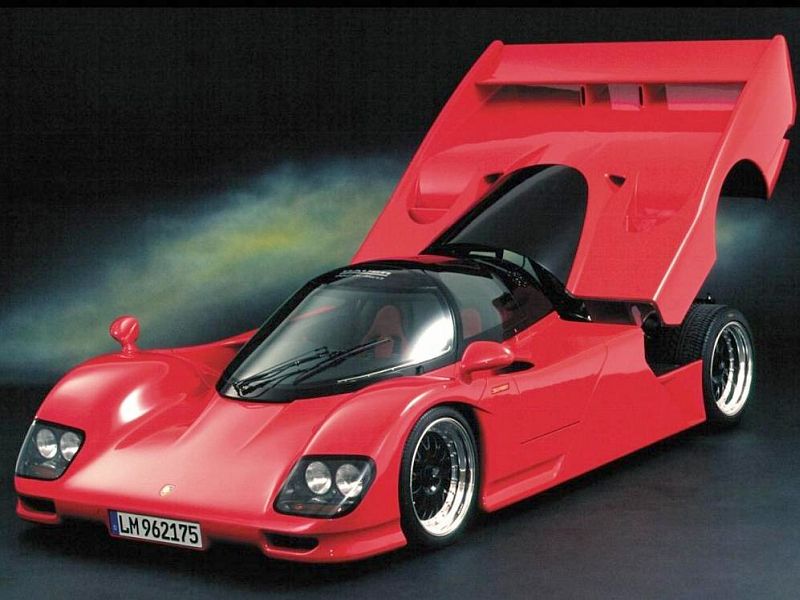
As for the top speed of this gem, the facts are very convincing. Jochen Dauer's car literally flies at 404 km/h, which is not theory but practice that was measured nowhere else than on a test track. Thanks to this dizzying speed, the Dauer 962 holds the title of the fastest production car approved for road use. Not only can the car fly at speeds of up to 404 km/h, but it can also conquer 100 km/h in a brilliant 2.8 seconds, which would make it comparable to F1 cars. For comparison with the current Porsche supercar, the Carrera GT, it "only" hits a maximum of 330 km/h and conquers 100 km/h in "only" 3.9 seconds.

However, whoever desires such performance luxury must also suffer. It is truly tight inside the Dauer 962. There is not enough legroom, knees scrape against the dashboard, and your forehead kisses the roof every time you brake. It is similar with getting in and out of the car. No wonder, this car is not for mortals. Probably anyone who sees this car or gets a ride in it doesn't even think about such things. The interior is fully upholstered in leather. The car even features a DVD player and a rearview camera that makes parking easy.
Those who head into the city center for shopping don't have to worry so much about tight parking spots. The danger comes from elsewhere: the swarms of admirers that form every time you stop. Even if they were giving something away for free somewhere else, you wouldn't get much help. Such a look for the Dauer 962 didn't come about by accident; the 962 was a pure sports car that peaked at the 24 Hours of Le Mans between 1982 and 1987.

It was from this legend that Jochen Dauer drew inspiration to create this road-legal sports car. The car is similar to the racing version, but still quite different. There is room for two people instead of one. Designer Archin Storz came up with a modification of the body that looks very similar to the original. He created a car that survived its time and will survive this one too.
Porsche was so enchanted by Dauer's act that they entered two cars into the 24 Hours of Le Mans, specifically in the GT1 class, which is close to production manufacturing. In 1994, the Dauer 962 won not only its class but also the overall victory.
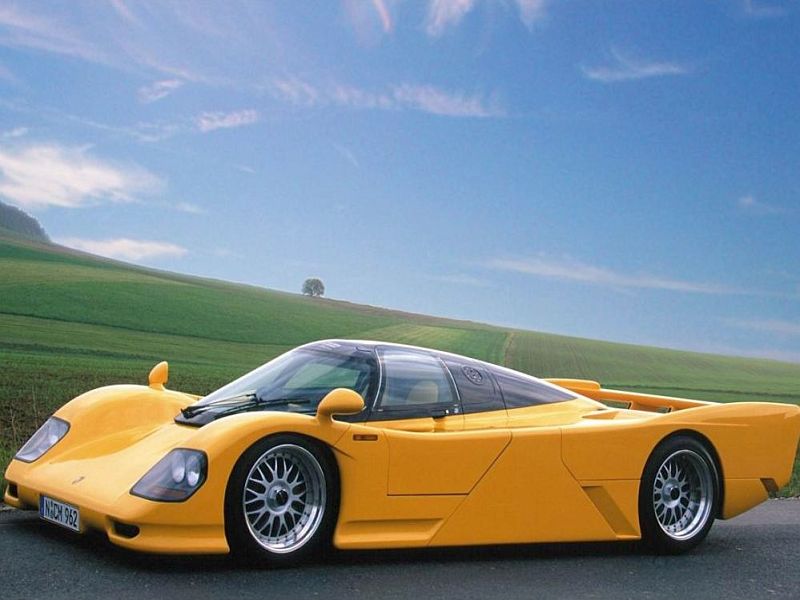
So far, 13 examples have been produced, with 37 more to follow. The price of this work of art is around 980,000 euros. This price figure is helped by the fact that it is all handmade. The manufacturer takes an original, disassembles it down to the last nut, and then reassembles it on a new foundation that is by no means simple.
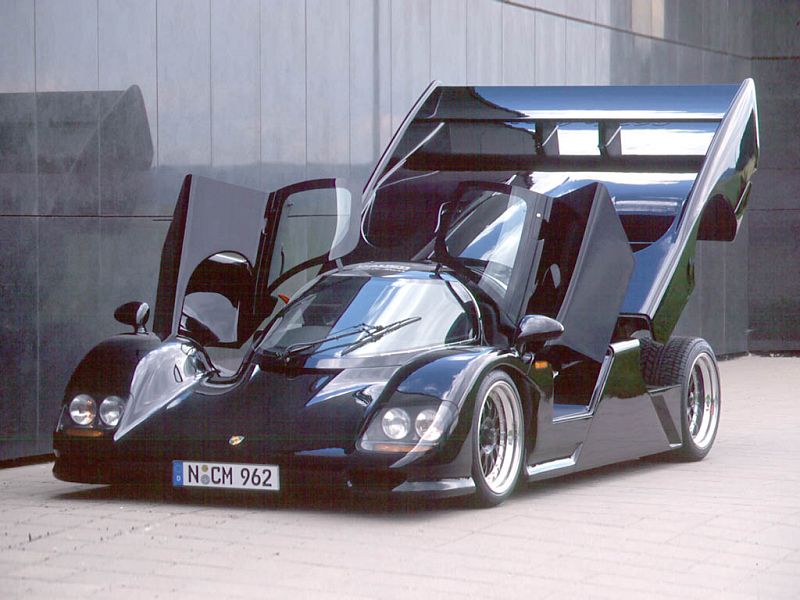
First and foremost, the chassis must be adjusted, as it is not really suited for "off-road" use on normal streets. The Nuremberg workshops did a solid job. The car is not extremely hard, but surprisingly comfortable. Using hydraulics, you can adjust the car's height as needed. Power steering gives even less experienced drivers the ability to turn the wheel. The engine is used from the original version, but only after a thorough overhaul. Thanks to two uncontrolled catalytic converters, the car emits harmful gases in an acceptable amount. Two massive turbochargers bring air into the car's lungs. The heart of the car brings 730 horsepower to life in a three-liter displacement, which playfully handles the 1,130 kg weight.
Once awakened, the machine puts on a hell of a show. The car leaves no one in doubt about its performance. Only when in maximum alert can you afford, via a three-stage pressure regulator, a maximum boost pressure of 1.35 bar and thus the highest power. Anyone who dares to sit behind the wheel must realize that the opponent is omnipotent. Because no "unnecessary" electronics weaken it. A good piece of advice at the end: "racing on public roads does not pay off."


25.4. 2004