911 RSR for Le Mans 2017

Porsche enters the 2017 season with the modernized 911 RSR. The new generation of the iconic 911 is not merely an evolution, but a fundamental technical breakthrough. Although the car retains the silhouette of the legendary 911, it is the most radical redesign of a racing 911 in history.
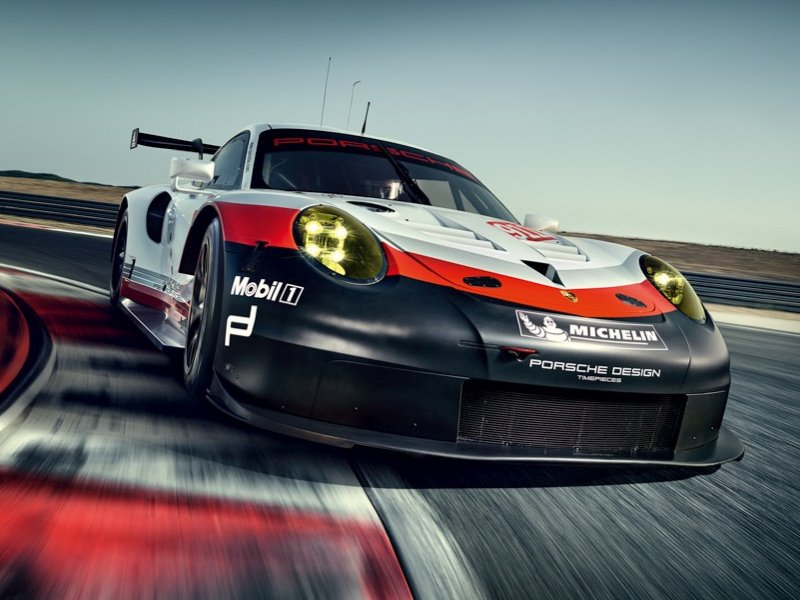
The most significant change is the placement of the engine in front of the rear axle, which is a complete novelty for GT-class Porsche 911 race cars. This step allowed engineers to better distribute weight, optimize aerodynamics, and, above all, install an exceptionally large rear diffuser that significantly increases downforce.

The heart of the car is a brand-new naturally aspirated four-liter flat-six engine, which is extremely light and technically advanced. The engine utilizes direct fuel injection, a rigid valve drive, and is designed with an emphasis on maximum efficiency and long-term durability in endurance races. Depending on the restrictor size, it produces approximately 510 horsepower.
The new engine concept paved the way for fundamentally reworked aerodynamics. The rear of the car is dominated by a large diffuser, complemented by a top-mounted rear wing taken from the Porsche 919 Hybrid racing prototype. The result is dramatically higher downforce and better aerodynamic efficiency at high speeds, which is a key factor at Le Mans and Daytona.
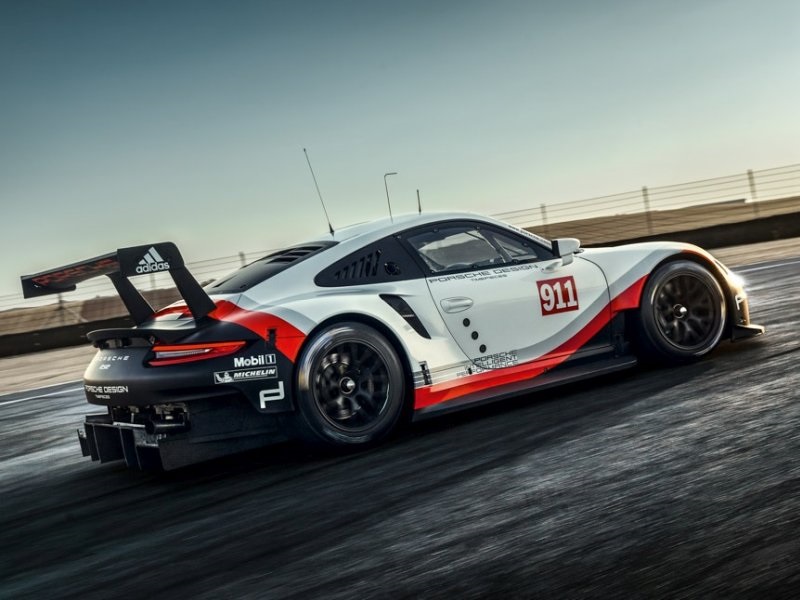
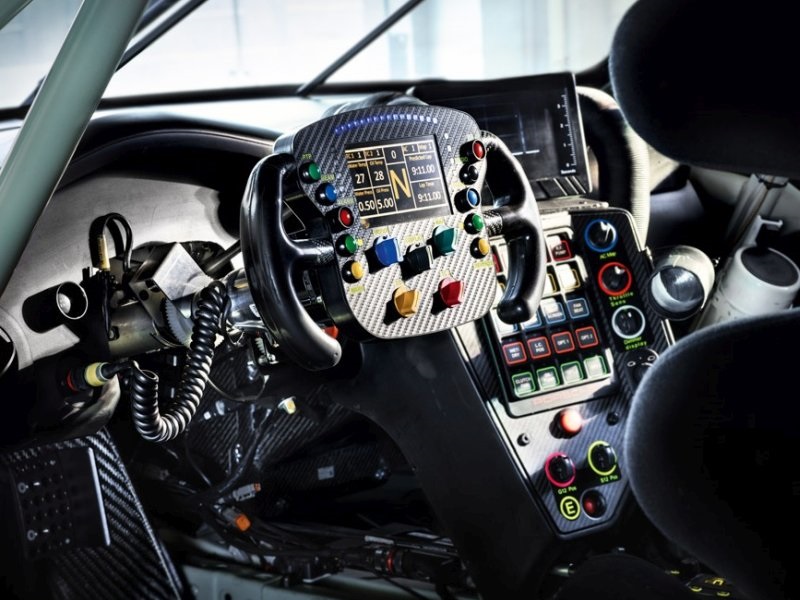
Engine power is transmitted to 31-centimeter-wide rear wheels via a six-speed sequential gearbox with a magnesium casing, operated by paddle shifters on the steering wheel.
The new 911 RSR completed Porsche's transition to a unified generation of flat-six boxer engines in GT race cars. Following the 911 GT3 R and 911 GT3 Cup models, the flagship of Porsche Motorsport now uses the same high-end technical foundation, optimized for various racing series. In doing so, Porsche has continued its tradition of pushing boundaries, much like it did in 1996 with the 911 GT1 model, which brought the brand an overall victory at Le Mans two years later.
Vehicle maintenance has also undergone significant modernization. Thanks to clever quick-release mechanisms, entire carbon fiber body panels can be replaced in a very short time. Similarly, adjusting the chassis settings is simpler and faster, which provides a crucial advantage in long endurance races.
For the first time in history, a Porsche GT race car is equipped with a radar-supported Collision Avoid System. This helps drivers detect faster LMP prototypes even in poor visibility and significantly increases safety during night stints. A new safety cage concept, a rigidly mounted racing seat, and the ability to adjust the pedals instead of moving the seat further enhance driver protection and ergonomics in extreme conditions.
Visually, the model has also taken a new direction. For the first time, it carries the new factory Porsche Motorsport design, which develops the brand's clean and dynamic style. From a bird's-eye view, a hint of the Porsche crest silhouette is visible, while the traditional combination of white, red, and black remains preserved.
| Technical specifications | |
|---|---|
| Engine type | 6-cylinder boxer |
| Displacement | 3996 cc |
| Power | 375 kW (510 HP) |
| Torque | 489 Nm |
| Max. RPM | 9500 rpm |
| Weight | 1246 kg |
| Weight | 1245 kg |
| Transmission | 6-speed sequential |


15.12. 2016