911 GT3 R Hybrid (997) - A Revolution and a Historical Legacy

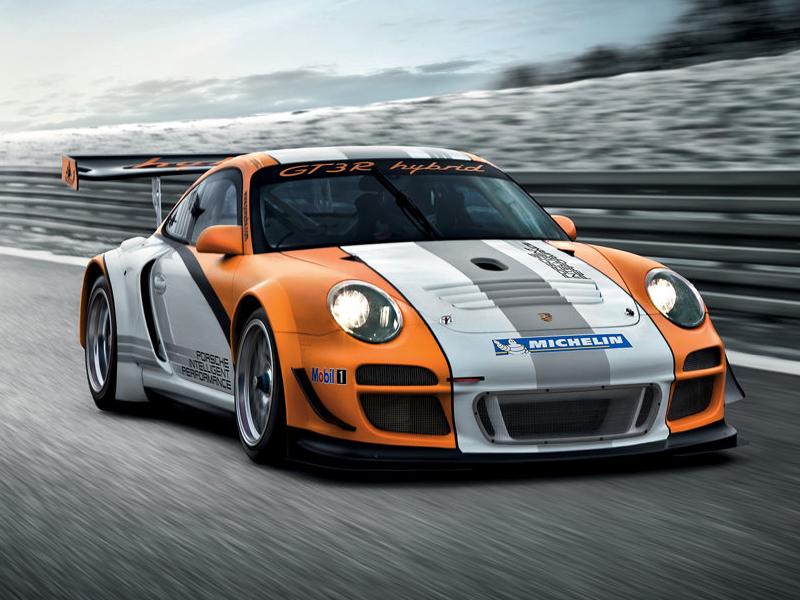
The future of motorsport is here! At the Geneva Motor Show, Porsche is introducing the revolutionary 911 GT3 R Hybrid. Forget heavy batteries; this racing special utilizes a unique flywheel rotating at 40,000 revolutions per minute. With a KERS system that delivers an additional 164 horsepower to the front axle, and building on the legendary legacy of Ferdinand Porsche from 1900, this 911 is setting out to conquer the Nürburgring Nordschleife.
In 1900, Ferdinand Porsche constructed the world's first hybrid automobile, which was presented at the Paris Motor Show to great interest. The Lohner-Porsche was powered at the time by two electric motors located directly in the front wheel hubs, which were charged via a dynamo driven by an internal combustion engine. With a slightly improved version, Ferdinand won the Exelberg hill climb in 1902. It was already his second hill climb victory with a similar car (he even set a new course record in the previous Semmering hill climb).

Exactly 110 years later, Porsche is presenting a new form of hybrid automobile at the Geneva Motor Show: the 911 GT3 R racing model, derived from the recently introduced classic GT3 R. This opens a new racing era for the Porsche brand, which has already accumulated over 20,000 winning trophies in roughly 45 years.
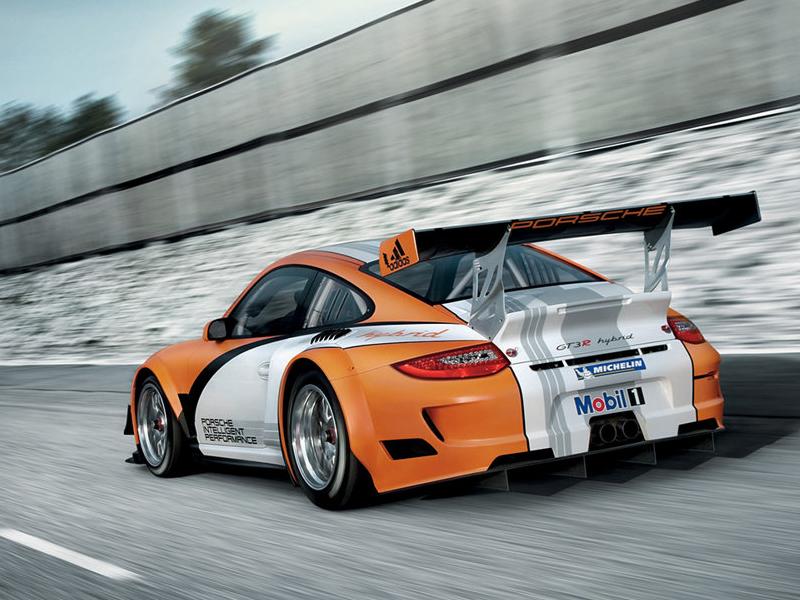
Although the Cayenne Hybrid prototype was introduced at the Frankfurt Motor Show in September 2007, Porsche has now prepared a major surprise by bringing the hybrid 911 GT3 R racing car to Geneva alongside the 911 Turbo S. It becomes the first hybrid 911 and, at the same time, practically the first production-ready Porsche with a hybrid powertrain. The car features a rear-mounted 6-cylinder boxer engine with 353 kW (480 hp), which traditionally drives the rear axle. In addition, there are two electric motors at the front, each with 60 kW (82 hp), which also drive the front wheels. This powertrain was developed specifically for racing use, and its specialty lies primarily in the use of a flywheel that generates electricity instead of using conventional batteries. The flywheel is located next to the driver and serves as the source of electricity for both front electric motors.
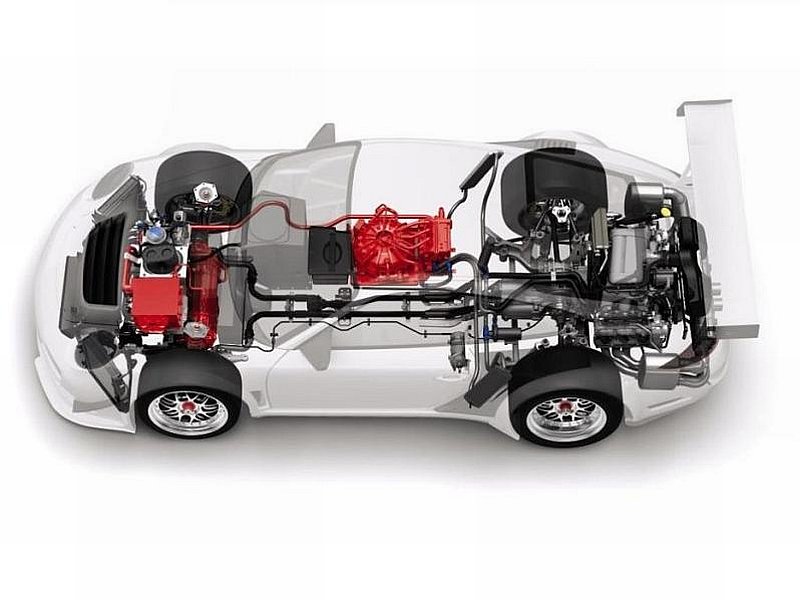
The flywheel generator itself is nothing more than an electric motor capable of spinning up to 40,000 rpm. It is in this motion that the necessary energy is stored in mechanical form. As soon as the driver touches the brake pedal, both electric motors become generators, and the electricity produced in them spins the flywheel. During acceleration or overtaking, the driver can then use this mechanically stored energy to increase the car's dynamic driving performance.

The flywheel begins to convert the accumulated mechanical energy into 120 kW (164 hp) of electrical energy, which powers the front wheels. This energy, which is lost in conventional cars as heat in the braking system, is now used very efficiently as an additional power source. The extra power does not necessarily have to be used only to increase dynamics, but also to save fuel. It is therefore possible, for example, to reduce the volume and weight of the fuel tank or to make fewer pit stops for refueling.
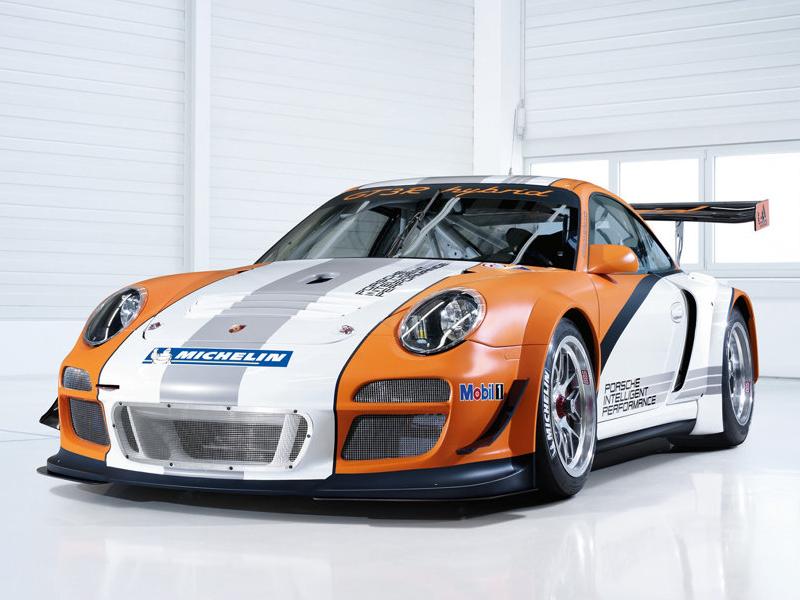
Following the presentation of the hybrid GT3 R at the Geneva Motor Show, the car will make its real-world debut in endurance races at the Nürburgring. The highlight will be the 24-hour race on the Nürburgring Nordschleife, which will take place on May 15th and 16th, 2010. The intention behind participating in this race is not so much to go for the win, but rather to test this hybrid technology in actual racing conditions, which will help with the development of this hybrid powertrain for future models. It is therefore more than obvious that it is only a matter of time before we see hybrid powertrains in production cars as well.
The participation of the hybrid 911 in the 24h Nürburgring in May 2010 is not just a marketing ploy. It is a rigorous test of technology that Porsche calls "Intelligent Performance." The goal is not just speed, but the ability to complete more laps per tank thanks to energy recovery. For us at Butzi.cz, this car is a tribute to the 1900 Lohner-Porsche and clear proof that hybrid technology from Porsche will not mean the end of emotion. The road to future victories at Le Mans has just begun.


12.2. 2010