Porsche 911 - The Complete Evolution (1963-2004)

The Porsche 911 is one of the longest-produced and most iconic sports cars in automotive history. From the premiere of the first generation in 1963 to the end of the air-cooled engine era in 1998 and the arrival of the modern 996 generation, the 911 has undergone significant technical and design evolution. This article offers a comprehensive look at the complete evolution of the Porsche 911 model between 1963 and 2004.
1963 - 1964
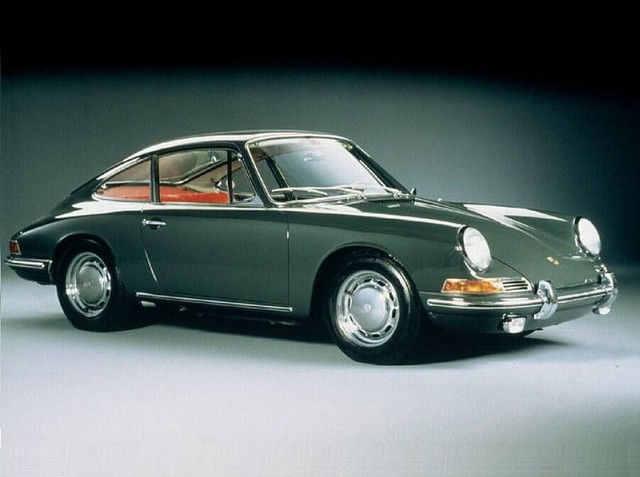
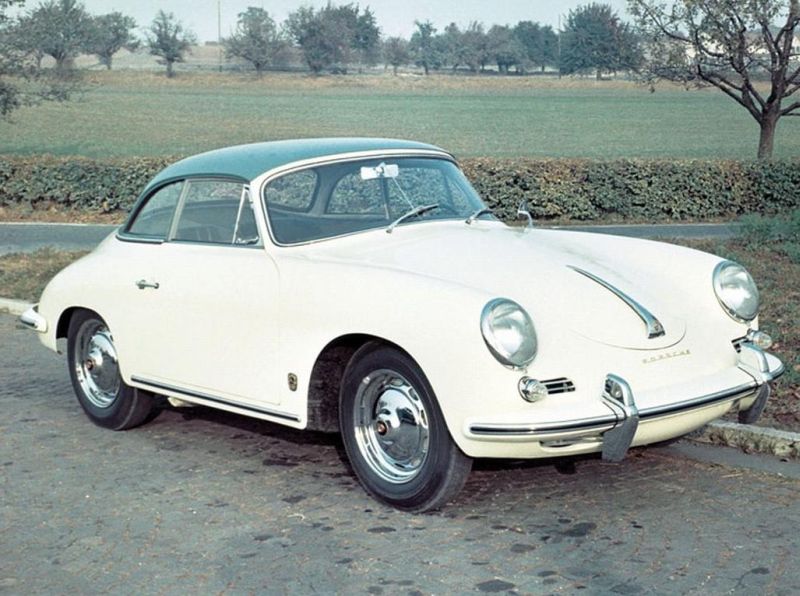
The Porsche 901 was introduced in September 1963 at the Frankfurt Motor Show as the successor to the 356 model, which had been in production essentially since 1950. The designation 901 was chosen because it was the automaker's 901st project.
True series production began a year later, in September 1964.
The car was received very positively by the public and journalists alike. It received the most praise for its dynamic performance. Acceleration from zero to 100 km/h in about 8-9 seconds and a top speed of 210 km/h were figures at the time reserved only for cars with larger engines and higher price tags.
The history behind the creation of the immortal shapes of the 911 is quite interesting. For a long time, there was debate about which car should replace the 356 series, which had been in production for over 10 years and was starting to become obsolete. The limit for its further improvement was its origin from the Beetle.
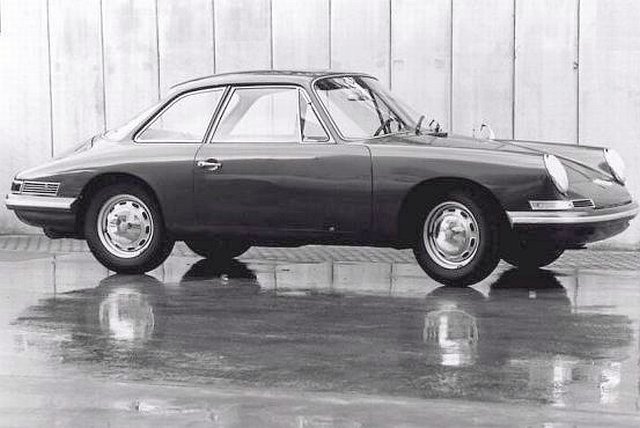
There was even consideration of producing a larger, fully four-seater car. In the end, however, the idea of a sports coupe with the same concept as the 356 prevailed. This is the field where Porsche is most confident; it is what they do best. Plenty of manufacturers make luxury cars, and most do it better than Porsche.
The author of the 911's bodywork was "Butzi" Porsche, the son of "Ferry" Porsche, the creator of the 356, and a very talented designer. One of the original concepts, the Type 695 T7, proposed a four-seater coupe with a notchback, where there would be enough room for adults in the back seats. The car looked quite similar to the final version of the 901 from the front, but the roof was not as sloping at the back; instead, it was horizontal and then featured a classically sloped rear window that transitioned into the engine lid at approximately the same angle as the final version.
In the end, however, it was decided to sacrifice passenger comfort in the rear seats in favor of a sporting spirit and shapes that better followed the successful 356 series. The prototype was shortened by about 20 cm, and the roof was given a new sloping shape.
Model Year 1965

The first cars from the end of 1964, referred to as "series 0," are actually the 1965 model, which is the first model year of the 911s. Just under a hundred cars (some sources claim 82 units) produced in 1964 are still called the "901". In October 1964, as you probably all know, Porsche was forced to change the model designation to 911 because Peugeot claimed rights to names with a zero in the middle. So, the 901 designation lasted only about a month.
Note: (If you find a part code in a spare parts catalog starting with 901..., it is a part that remained unchanged from the 1964 prototypes.)
Standard series equipment for the 901 model, and subsequently the 911, included a five-speed gearbox, a two-liter, six-cylinder air-cooled engine with 130 horsepower located behind the rear axle, four disc brakes, and fifteen-inch steel wheels. The gearbox was designated 901 and had first gear to the left and down, opposite reverse, which was shifted to the left and up. (This type of shift pattern was chosen so that it would be easy to shift from second to third and back during sporty driving - they were positioned opposite each other).
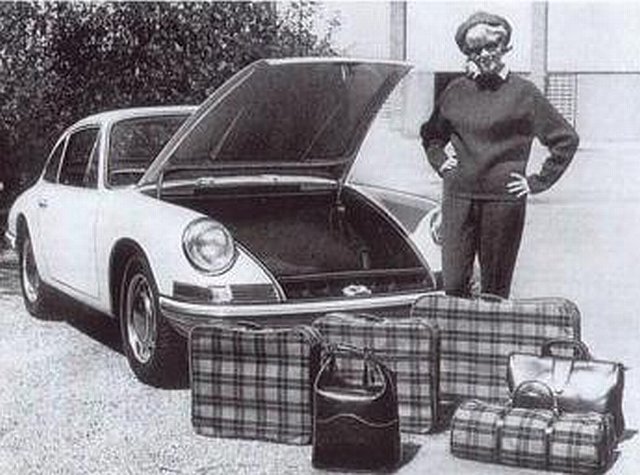
The car was sprung by longitudinal torsion bars at the front and transverse ones at the rear (those round caps in front of the rear wheel arches cover the openings for installing or replacing the rear torsion bars). Torsion bars give the chassis a sporty character, and their very compact design allowed for a significantly larger front luggage compartment compared to the previous 356 series. Period advertising materials emphasize this advantage, noting that together with the storage space on the folded rear seats, the luggage volume totals 235 liters (200 in the front trunk, 35 on the rear seats), a value that a standard sedan of that time did not need to be ashamed of.
Model Year 1966
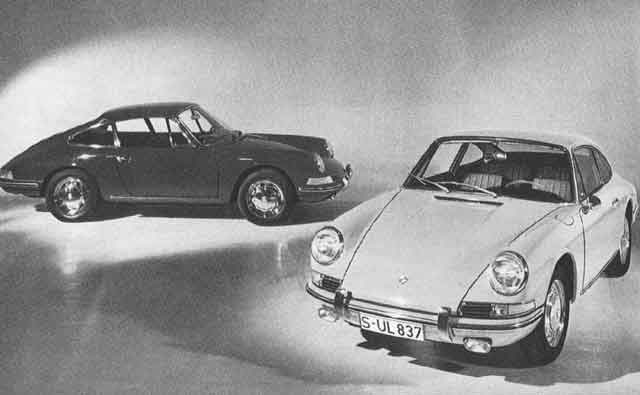
The models for 1966 did not differ significantly from the 901 of the 1965 model year. Minor changes occurred in the carburetors, and there was a small improvement to the brakes. Visually, the cars can be distinguished by one subtle detail: on the rear of the 1965 model year cars, the "911" inscription is in italics in gold color and slanted upwards. For the following year, the inscription was changed to a straight, blocky font in silver.
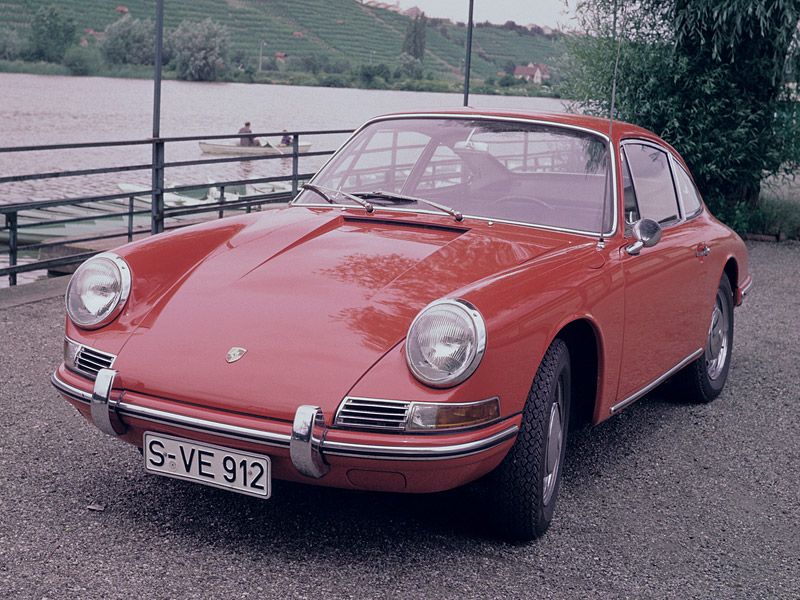
In April 1965, the Type 912 saw the light of day. Simply put, it is a 911 with a four-cylinder engine from the older 356 model, tuned to 90 horsepower.
When Porsche came out with the new 911, they realized they suddenly lacked a more affordable model for customers who were used to the price of the 356. While the 1600 SC 356 coupe cost 16,450 marks back then, the 911 climbed to a noticeable 22,900 marks in August 1965. So, when the new 912 came out at 16,250 DM, it immediately became a hit. It was produced until 1969, when it was replaced by the low-end 911 designated T.
Model Year 1967
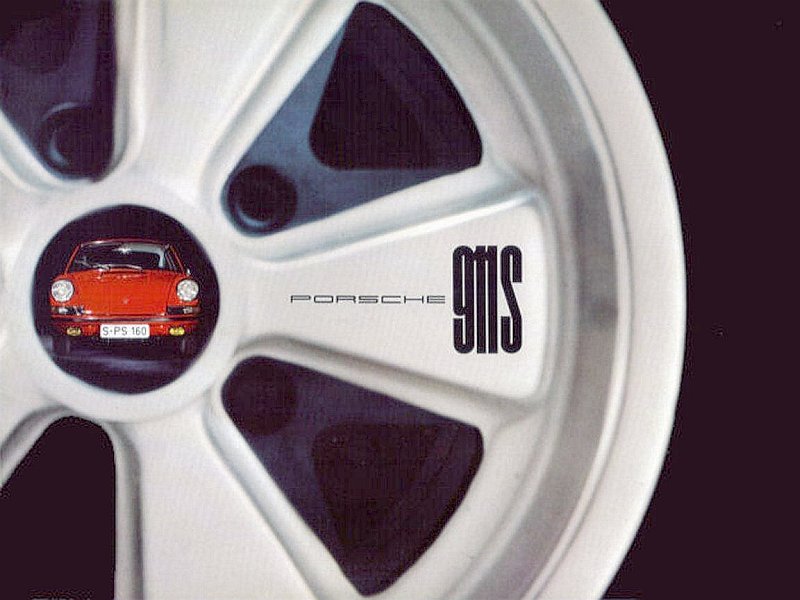
In mid-1966, the 911 designated S joined the family. The two-liter engine provided 160 horsepower, and the chassis (transverse stabilizers at the front and rear), brakes, and wheels were improved. The S came with fifteen-inch "Fuchs" wheels, which were forged. The list of improvements compared to the standard 911 would be quite long; the car was also slightly lighter and, of course, more expensive. The price was set at 24,500 DM (the standard 911 had meanwhile dropped to 21,000 DM).
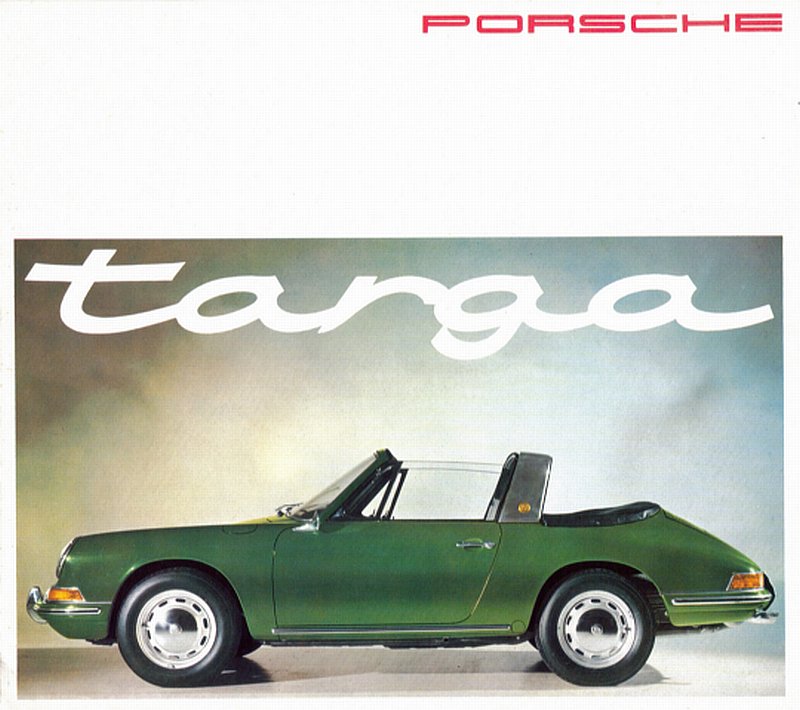
In September 1965, the Targa was introduced to the world. Porsche was worried about American legislation, as there was speculation about a potential ban on convertibles for safety reasons, so they developed this body style with a roll bar, which, although open, met safety criteria in the event of a rollover, just like the coupe. Approximately 40% of the automaker's production was destined for the US market.
The Targa entered series production in the second half of 1966. Initially, Targas were equipped with a soft rear window that could be folded down. Something like a landaulet. The top roof section was folded and stored in the trunk after removal.
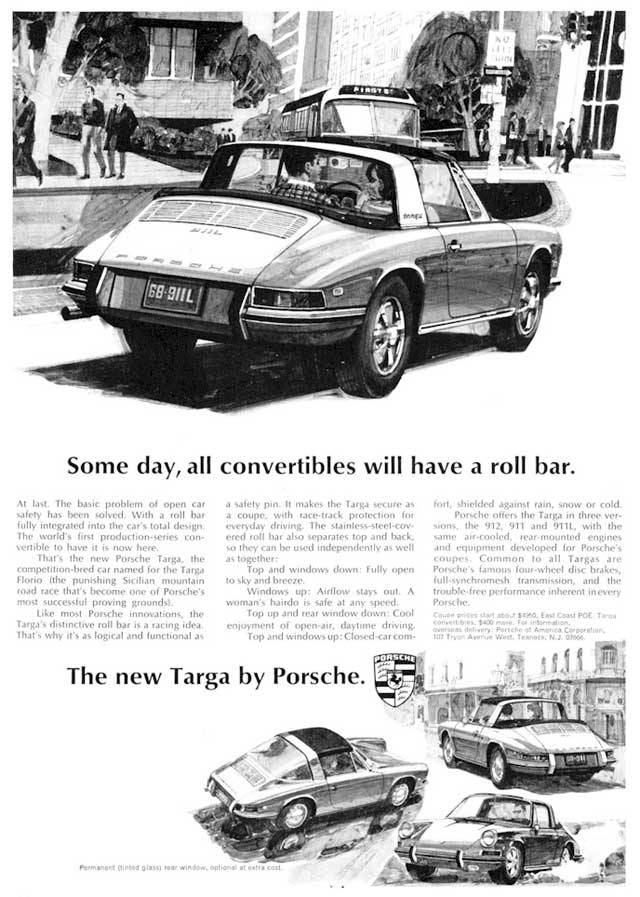
The name "Targa" was chosen after the Targa Florio race held in Sicily, where Porsche had scored successes.
This American advertisement for the Targa (left) is quite funny, where it says: "One day, all convertibles will have a roll bar. Finally, the problem of all open cars and their safety has been solved. Here comes a roll bar fully integrated into the overall design of the car. The first mass-produced convertible to be equipped with it is just hitting the market."
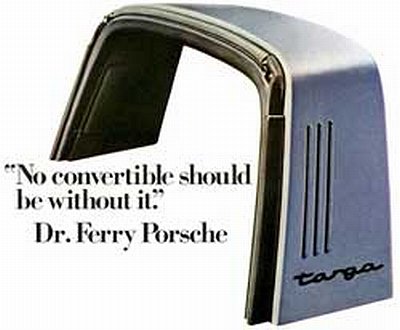
All versions of the 1967 model year 911 are equipped with Weber carburetors. The heat exchangers providing interior heating were also improved. In the interest of improving stability, 11kg weights began to be mounted behind the front bumper. The door handles were changed, and wood on the dashboard was replaced by aluminum. On the engine lid, the PORSCHE inscription was rendered in larger letters and stretched across the entire width of the rear.
Model Year 1968
Compared to the "0" series produced until 1967, Porsche comes with dozens of changes. Many relate to adjustments in response to American safety and environmental legislation. There was also a split between models for Europe and the USA.
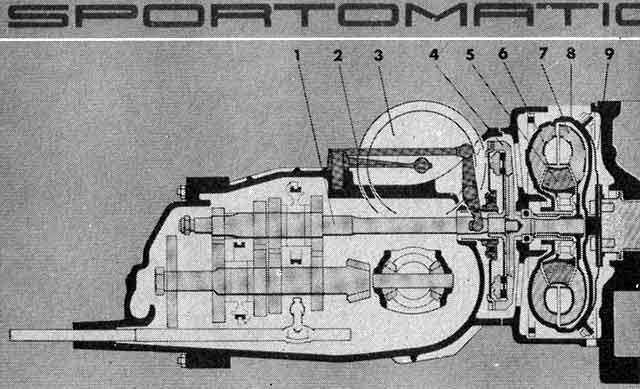
In Europe, they began offering the 911 T (Touring) models, which was a discounted variant with a weaker 110-horsepower engine, intended to replace the 912 for the following year. Last year's 911 became the 911 L (Lux), which additionally received internally ventilated brake discs, and the 911 S model had its brakes improved.
For the USA, the S version was not supplied. Cars designated 911 and 911 L were sold here, but the designations did not correspond to their European counterparts. The 911 L for the USA corresponded in equipment to the European S, but was equipped with only a 130-horsepower engine.
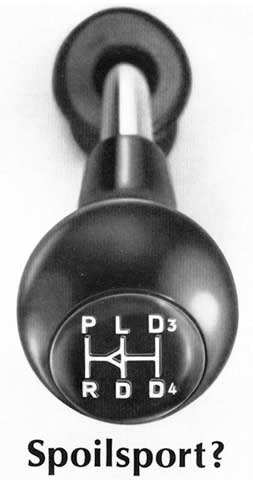
From the 1968 model year, a semi-automatic four-speed gearbox called Sportomatic was also offered. It worked on the principle of automatically depressing the clutch pedal whenever the driver moved the gear lever. Sportomatic was intended primarily for customers in the USA. It was not possible to order Sportomatic for the 912s.
From the 1968 model year, the windshield wipers were painted black to eliminate sun glare in the driver's field of vision. Due to numerous customer complaints about the drafty and leaking plastic rear window on the Targa, Porsche developed a glass and heated window, which was supplied upon request.
Model Year 1969
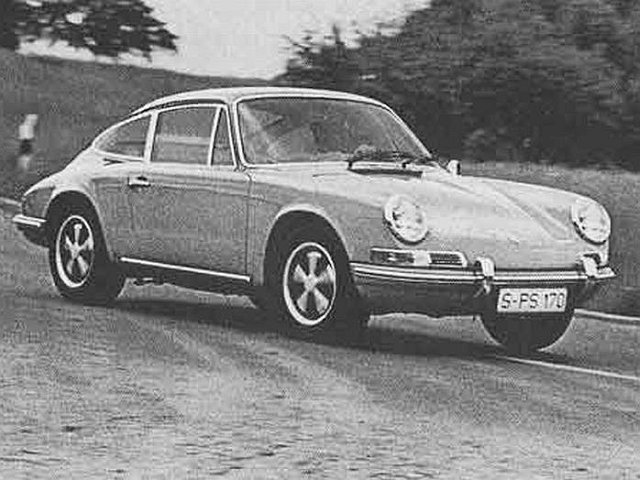
The first major change in the 911's construction came in the 1969 model year. It involved lengthening the wheelbase and thereby improving stability. The rear wheels were moved back by about 5.8 cm, which is not that much, and at a glance, an untrained eye might not notice it immediately. At the same time, the fenders were slightly widened (pulled out) to accommodate wider wheels.
Those who don't have an eye for the longer wheelbase can recognize the '69 model by the absence of the handle for opening the triangular door window - for increased theft protection, the vent windows were installed fixed (this does not apply to the Targa, where opening windows were installed until '76). But so you don't mourn that you don't have a guide to recognize a '69 Targa, there is something to catch onto here too. From '69, there are ventilation grilles on the roll bar. In the interest of even weight distribution, the engineers decided to replace one battery with two and place each in one corner in front of the front wheels. This solution lasted until the arrival of the G model for 1974.
The 1969 model year comes to the European and American markets in three levels of equipment and power. The base is the 911 T with a Weber carburetor. The 911 E replaces the L designation from the previous year and is equipped, along with the more powerful 911 S (170 horsepower), with Bosch mechanical fuel injection (E for Einspritzung, with a maximum output of 140 PS). The rest position of the wipers was moved from the right side to the left. The 912 is also sold for the last year.
Model Year 1970-1971
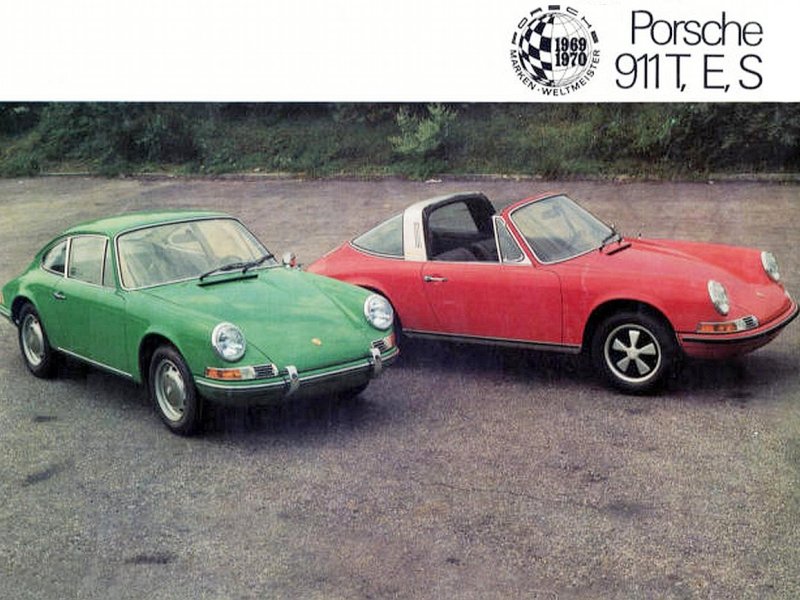
The 912 ceases production, and in the company hierarchy, besides the weaker 911 T, it is replaced by the entry-model 914, which was created in cooperation with Volkswagen.
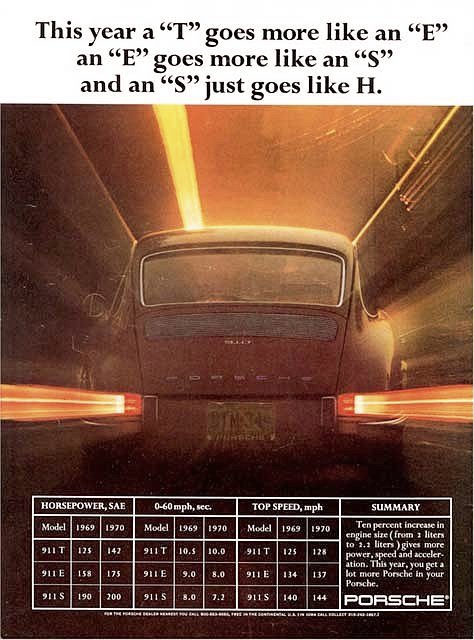
The 911 gets an engine with a higher displacement of 2.2 L (bore increased). This fact is emphasized by a label stuck on the rear window. With the new engine comes a redesigned clutch.
The "level of ferocity" designations - T, E, and S - continue even with the larger engine. The outputs of the 2.2 L engines are: T - 125 horsepower (Zenith or Weber carburetors, standard only 4-speed gearbox, but internally ventilated brake discs), E - 155 horsepower, S - 180 horsepower (both engines with Bosch mechanical injection).
Cars produced after 1969 can be recognized, among other things, by different door handles, which are no longer opened by pressing a button at the end of the handle, but by pulling a lever hidden inside the handle. Rear wipers and electrically operated windows also began to be supplied upon request.
Model Year 1972
Another increase in engine displacement to 2.4 L - this time thanks to a longer stroke. At the same time, the compression ratio is lowered, which allows the use of fuel with a lower octane number (again, the influence of the US market, which is switching to unleaded gasoline, which was lower-octane at the time).
The base model T sold in Europe still uses a carburetor, while the 911 T for the USA and the 911 E and 911 S use Bosch injection. The European 911 T had 130 horsepower, the injected American 911 T 140 horsepower (this is perhaps the first and last time a US version had higher power than the European one, E 165 HP, S 190 HP).
Higher power and especially engine torque also required a new gearbox, designated 915, which replaced the 901 type. The new gearbox already had the traditional H-pattern gear layout with first gear to the left and up.

A peculiarity of the '72 model is the oil filler cap located behind the right door. The idea was good, to distribute weight more evenly and move the oil tank toward the middle of the car (originally it was located behind the right rear wheel), but it got a bit out of hand. It led to a greater-than-small number of accidents when helpful but uninformed gas station attendants pumped a bit of fresh gasoline into the oil.
During tests in the wind tunnel, a new spoiler was developed under the front bumper, which helped stability, especially at higher speeds on wet surfaces. This spoiler was standardly mounted on the 911 S version, and for an extra charge on lower models. Recognizing the 1972 model is also possible by the new rectangular-shaped rearview mirrors, which replaced the previous round ones.
Model Year 1973
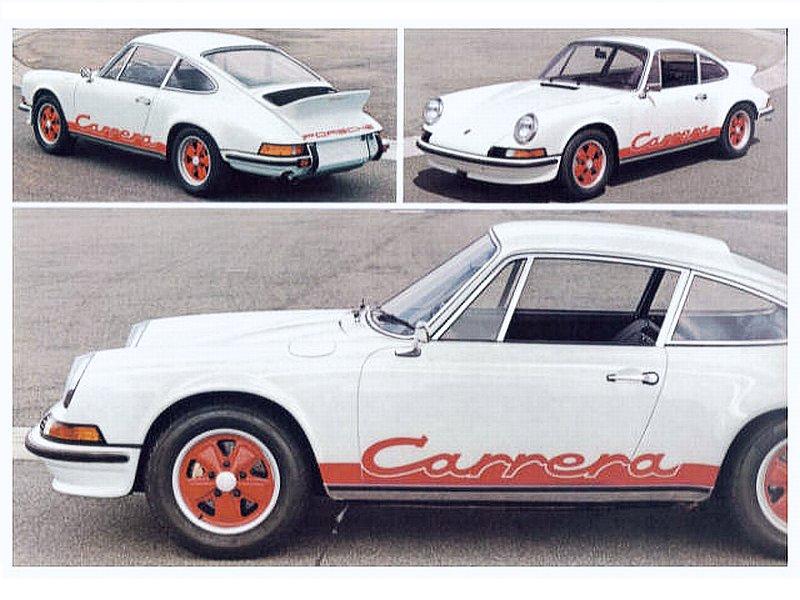
The most important moment of the 1973 model year was the introduction of the 911 Carrera RS. The 911 RS was developed as an alternative to the 911 S, which was not performing very well in competitions. In order for the new RS model to be qualified, a series of at least 500 units had to be produced for the public. Ernst Fuhrmann, who was appointed head of management by Ferry Porsche in '72, was worried about how the automaker would manage to sell these 500 units at all.
The 911 Carrera RS was introduced at the Paris Motor Show in the fall of 1972. Before the exhibition ended, all 500 units were sold out. The factory, of course, did not idle and ordered another batch of 500 units into production. When those were also snapped up, another 800 were added. In total, there were 1,800 units of the true 911 RS. Today, these cars are among the most sought-after 911s, and their price is adjusted accordingly. Also for this reason, converting standard models into 911 RS replicas is a favorite pastime of many fans.
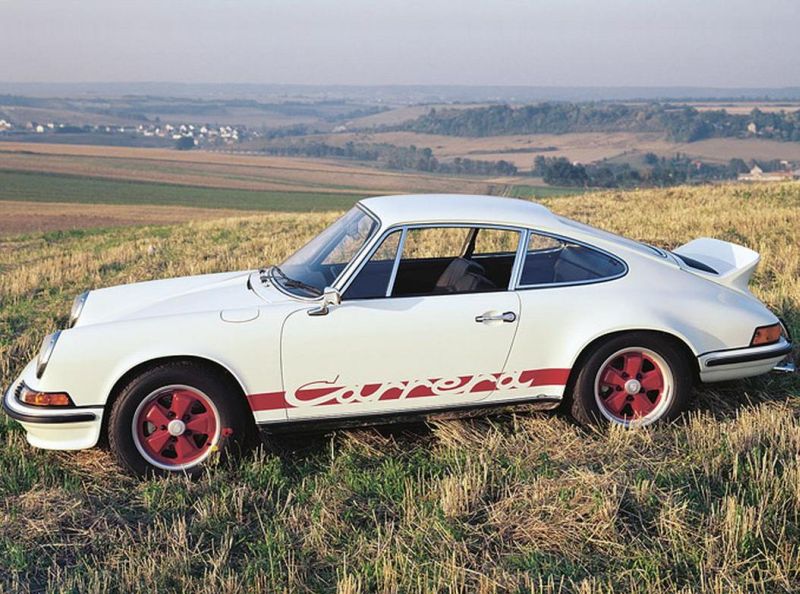
The Carrera RS, whether true or a replica, can be recognized by the rear upward-curved spoiler, called the "Ducktail." The RS also has wider rear fenders, is much lighter, has Fuchs wheels painted in the color of the side Carrera inscription, has a typical spoiler at the front, etc.
And what was happening in standard series production for 1973?

The unfortunate oil tank moved back to its original place. The front lower spoiler was standard on both the 911 E and T. The originally chrome intake grilles located next to the turn signals were painted black for this model year.
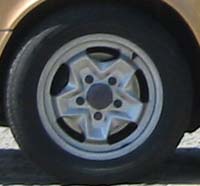
New ATS alloy wheels, called "cookie cutters," hit the market.
From January 1973, the 911 T model for the USA was no longer equipped with carburetors, but rather with electronic K-Jetronic injection, "CIS" (Continuous Injection System). The 911 T model was equipped with it from '73, and more powerful versions a year later. (CIS was used until 1983, when it was subsequently replaced by the Bosch Motronic system). The CIS-equipped T for the USA had 140 PS that year, which is more than the European one. For the European version, everything in the engine remains the same. The T still has Zenith carburetors.
Model Year 1974
G-series - rubber bumpers with bellows - that is how one could simply describe perhaps the most fundamental change in the appearance of the 911 in the period 1964 - 1989.

Many people were disappointed by the appearance of the new 911, however, others praise the way Porsche solved the new legislation for the USA, which mandated that the car must not be damaged even in a 5 mph impact.
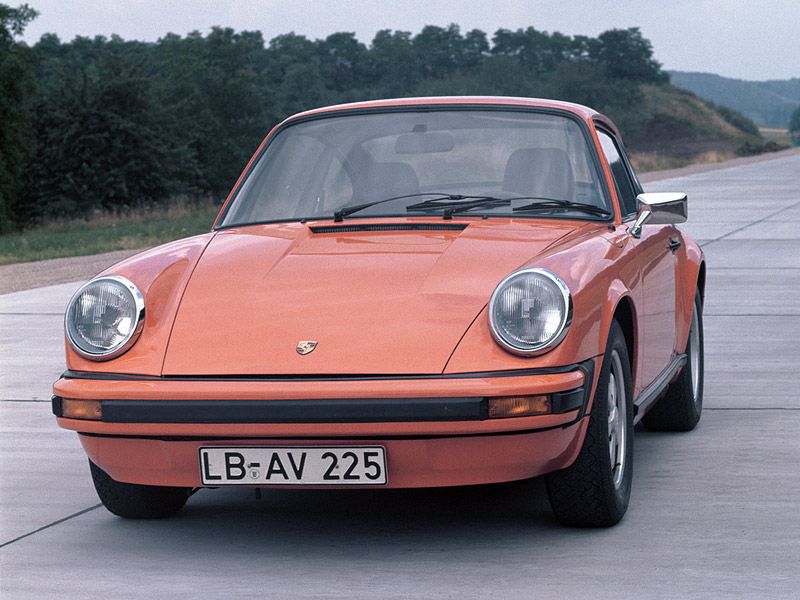
For the '74 model year, the previous letter-based designation is replaced by another system: the base is simply called the 911, the sharper version the 911 S, and the most powerful is the 210-horsepower Carrera, which is mechanically identical to the Carrera RS, only it has the G-series body. The Carrera for the USA, however, is no longer an equivalent to the RS; the engine is identical to the 911 S version. All 911s have a new 2.7 L engine, derived from the Carrera RS. In the interest of meeting emission limits, however, mechanical injection is abandoned (except for the Carrera), and the 911 gets the new CIS system. Unfortunately, the bugs are not yet worked out, so there are frequent problems with backfiring in the airbox. The engine and gearbox heat up significantly. The engine's lifespan is significantly shorter, and an additional oil cooler is offered as one solution. Airboxes are only retroactively improved with special expansion valves that protect them from exploding when gasoline injected back into them happens to ignite.
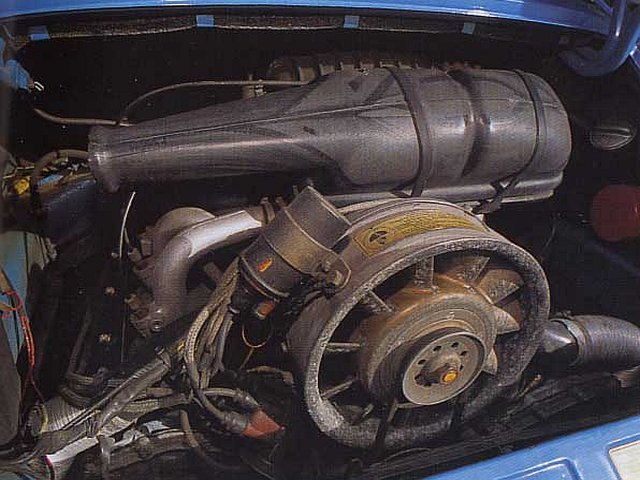
When starting the engine cold, it is strictly forbidden to touch the gas pedal, otherwise, there is a risk of the aforementioned fireworks. The cars are therefore equipped with additional manual throttle levers precisely for easier starts. The base of the engine is made of a new material, magnesium, which is softer, and it happens that threads are stripped and the bolts with which the cylinders are mounted are pulled out.
In short, the 2.7 engine was not very successful, and the reputation of the 911 as the most reliable and practical sports car was even threatened. Nevertheless, compared to previous model years, active safety is increased, especially in the interior. The new exterior design is accompanied by a new steering wheel with a safety column. The dashboard has also changed. The seats are also new, with integrated headrests.
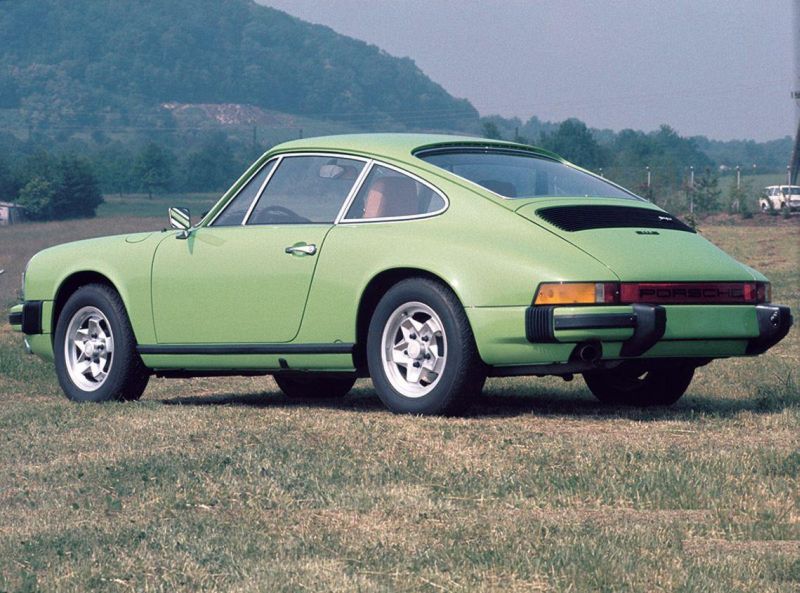
The 911 S and Carrera have additional oil cooling located in the right front fender, where oil is led by pipes under the right rocker panel. The pedals were also redesigned, and the clutch received an assist spring. The fuel tank was enlarged to 80 liters, which allowed for a new space-saver spare wheel, which is deflated by default and takes up less space. The exterior rearview mirrors are larger from the '74 model year and have a rectangular shape. Between the rear lights stretches a long red non-reflective strip with the black inscription porsche. The engine grille on the rear lid is in matte black, and the 2.7 inscription is in chrome. A headlight washer is supplied upon request.
Model Year 1975
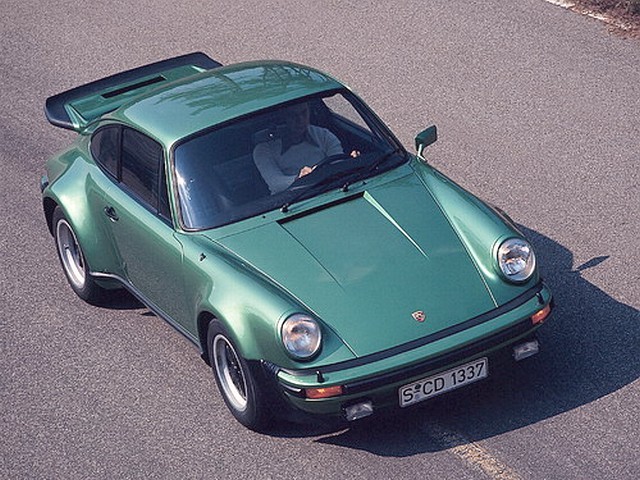
For the European market, the 911 Turbo with a 3-liter engine and 260 PS began to be produced. The official model designation is 930. They began to be sold in March '75. It was the first mass-produced car with exhaust-gas-driven turbocharging. Originally, it was said that only small-series production was planned, but the demand was so strong that the turbo became the dream car of almost all Porsche drivers. Price? 65,800 DM (the atmospheric 911 cost half - 32,350 DM). But it has air conditioning, automatically regulated heating, electrically operated windows, an electric antenna and car radio, two additional speakers in the back, and a rear wiper as standard. Compared to a standard 911, it has significantly widened fenders and wider wheels (205s at the front, 225s at the rear), a large downforce wing at the back, and a front spoiler under the bumper.
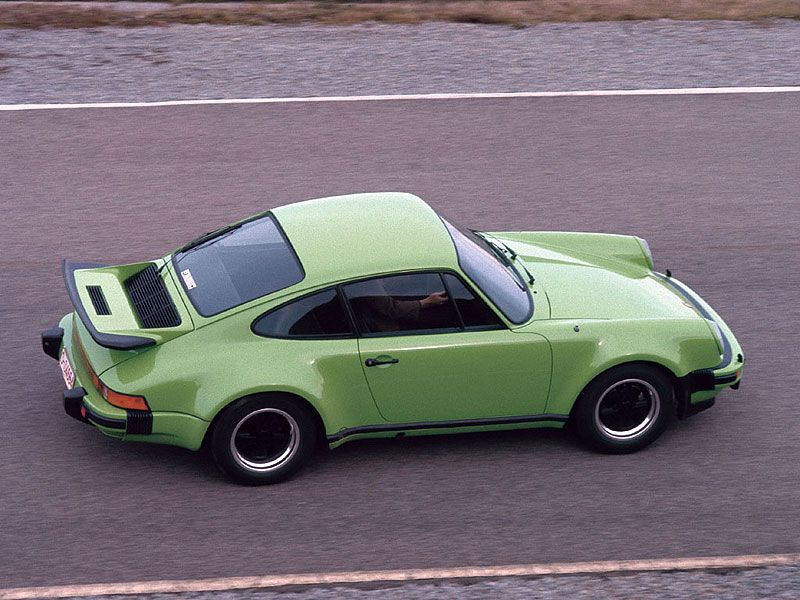
The 911 Turbo went over 250 km/h and accelerated to 100 km/h in 4.9 seconds.
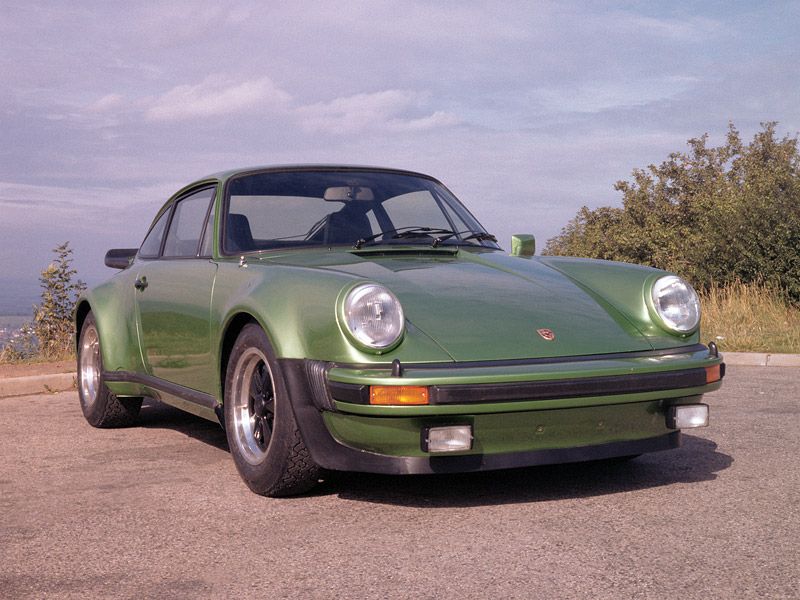
It received a new, reinforced, four-speed gearbox, designated 930. It made do with it until '88. Imagine that, such a car, and even in '88 it only has a four-speed gearbox!
Otherwise, even the 911 Carrera received a larger rear wing called the "Whaletail" (the whale tail was said to be more suitable for passing pedestrians than the pointed "Ducktail").
From '75, steel wheels are no longer supplied; ATS alloy wheels continue to be the base. Otherwise, not much changes for '75 in the base model line.
Model Year 1976
For the 1976 model year, the 911 Carrera derived from the RS was no longer offered. Instead, the Carrera with a 3.0 L engine, which had its base in the 930 turbo, is on offer. It also gets K-Jetronic injection, like the other models. Mechanical injection is being abandoned.

The manual throttle was abolished after the engineers managed to find another solution: a vacuum starter regulator. The air-cooling fan was changed to a different one with only 5 blades. However, its speed was increased.
All Porsche models have a galvanized body, and the warranty against rust-through is extended to 6 years. It is strange that some experts rate the 2.7 L 911 as the rustiest of all 911s. A switch is made to an electronic speedometer. Cruise control (in Porsche terminology "Tempostat") and an automatic interior temperature control system with a sensor on the ceiling above the mirror are supplied upon request. The exterior mirrors are painted in the car's color and receive electric adjustment and heating.
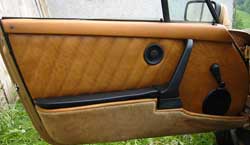
Sportomatic is still on offer, but from the '76 model year, it has only 3 gear speeds instead of four. The door upholstery is changed and is characterized by diagonal seams parallel to the inner handle. Headlight bezels on the Turbo and Carrera are in the car's color. The 2.7 inscriptions disappeared from the rear. The Turbo has headlight washers as standard.
Especially for the USA market and for only one year, the 912 E was produced, which was again a four-cylinder version of the 911. It had a two-liter engine originating from the 914 model, which developed 90 PS. It had a five-speed gearbox as standard.
Model Year 1977
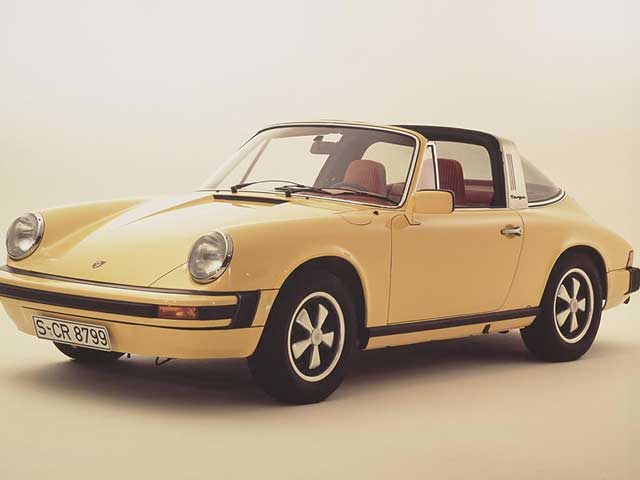
You can recognize '77s from the inside by the fact that they have vents in the middle of the dashboard. Although only unheated air comes out of them, they still significantly improve the climate in the car, especially in warmer regions. The Targa loses the ability to open the triangular vent windows. To make the work of thieves more difficult, a change to the locking knobs in the doors is also intended - when they are pushed down, they disappear into the upholstery.
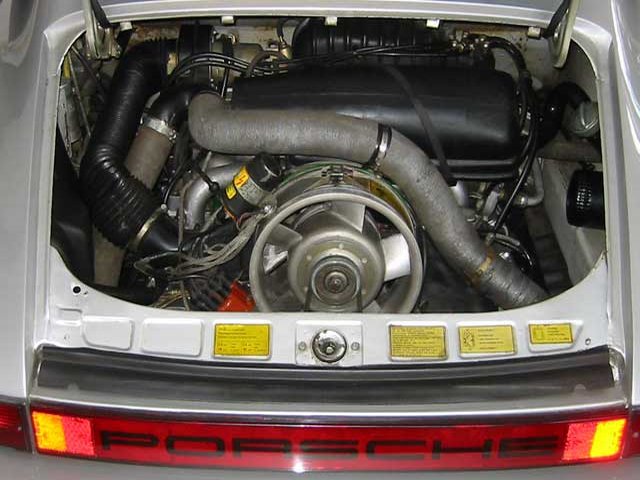
The 911 Carrera and Turbo begin to be equipped with a brake booster. The clutch should be easier to depress again, which is taken care of by two new assist springs. The gearbox is also changed.
Model Year 1978-1979
The arrival of the 911 SC (Super Carrera) model, which follows the previous S and Carrera models (hence the SC designation). The Super Carrera has a body with the same widened rear fenders as the previous Carrera.
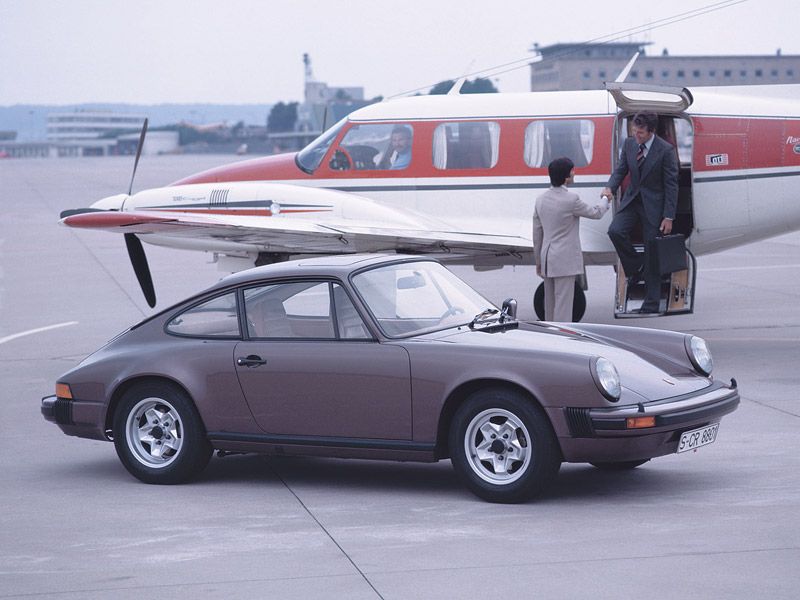
The 3-liter SC is significantly more reliable than the 2.7 L models, and it is also more economical and environmentally friendly. The 180 PS output stands somewhere in the middle between the '77 911 (which had 165 PS) and the '77 Carrera (200 PS). The torque is higher, however, and therefore the SC is more comfortable to drive and feels peppier than the Carrera from last year. The engine is again based on the 3-liter turbo; the turbo meanwhile increases displacement to 3.3 L (output 300 PS vs. 260 PS in '77) and gains an intercooler. At Porsche, they decided to simplify the offered range of 911 models. From the '78 model year, only the SC and Turbo are on offer.

The SC was supposed to be the last proper Porsche 911. CEO Ernst Fuhrmann assumed that Porsche models with a liquid-cooled engine in the front would replace the conceptually obsolete rear-engine cars in the company's lineup. The market, however, had other ideas. Although the 928 and especially the 924 were selling quite well, the 911 remained popular and is still considered a true classic Porsche.
At the end of 1980, Ernst Fuhrmann left his position and was replaced by Peter Schutz. Ferry Porsche believed that the 911 still held enough potential, so the new director launched a program for further development of the 911. At the October Frankfurt Motor Show in 1981, a new concept of a convertible with all-wheel drive was introduced. There was huge interest in the new convertible. Less so in the all-wheel drive...
Model Year 1980

The Porsche 911 SC for 1980 has an output of 188 PS. However, fuel with a higher octane number must already be used ('78 and '79 run on 91 octane gasoline). Electric window operation becomes standard equipment, and for US models, air conditioning as well. The semi-automatic Sportomatic gearbox, for which there was negligible interest, disappears from the optional offer. In the United States, 911s are standardly equipped with a three-way controlled catalytic converter.
Model Year 1981 - 1982
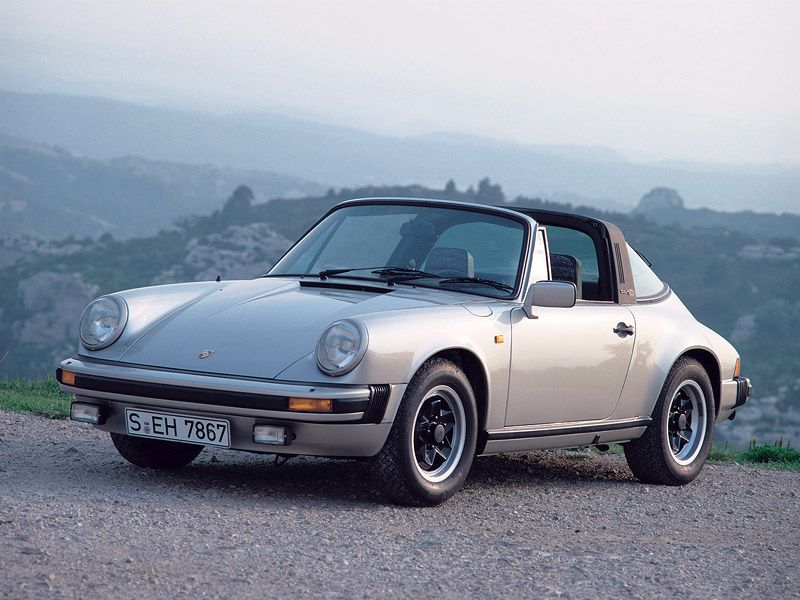
The power of the three-liter engine is increased again, to 204 PS. The warranty against body rust-through is extended again, this time to 7 years. Side turn signals are placed on the front fenders. For the Turbo, fuel consumption was significantly reduced for the '82 model year thanks to a redesigned mixture preparation and new ignition. For the 911 SC, the centers of the ATS alloy wheels were painted as standard to visually approach the optional Fuchs wheels.
Model Year 1983

The 911 Cabriolet is introduced to the market. It is the first time since 1965, when production of the 356 type ended, that Porsche is selling a classic open-top car. Over time, sales of the Cabriolet grow, mostly, however, at the expense of the Targa.
Model Year 1984-1986
The new Carrera with a 3.2 L engine arrives. More powerful, more economical, better.

The new engine abandons the K-Jetronic injection system, which continues to be equipped only on the Turbo. The 3.2 L engine uses Bosch digital electronics called Motronic 2 DME (Digitale Motor-Elektronik). Besides increased displacement, a very significant improvement also arrives, and that is hydraulically operated timing chain tensioners. The previous system, relying on its own integrated tensioners, was not very reliable, and it happened that the chain skipped and the valves met the cylinders (ouch!). The new tensioners used a connection to the engine's oil circuit, where there was no risk of the tension fading. Given that this solution proved very successful, Porsche developed a kit that could be retroactively installed on all previous 911 generations.
Compared to the 3-liter SC, the Carrera also received better brakes with larger discs and a booster from the Turbo.
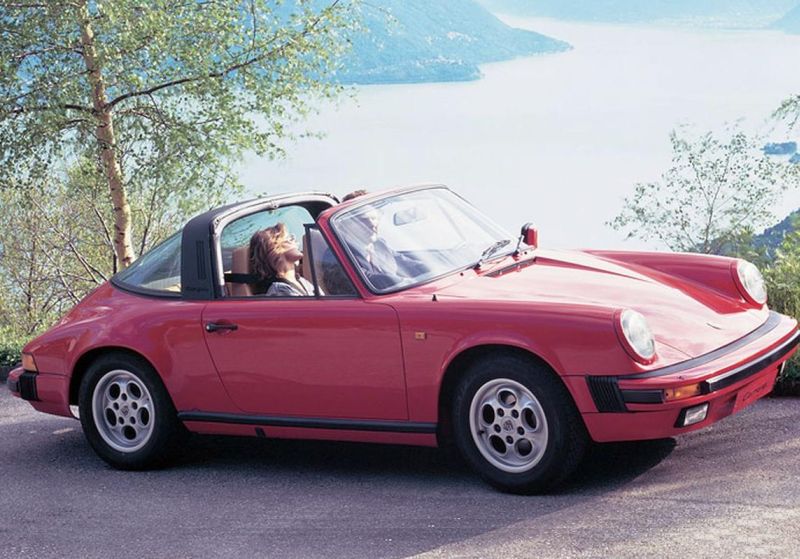
The gearbox was taken from the previous SC model, but it receives an external oil cooler, which is controlled according to the current speed of the car.
Visually, the new Carrera can be recognized by the inscription on the rear lid and by the new front spoiler under the bumper, which has integrated fog lights. Looking into the interior, you will find that it also received a new four-spoke leather-covered steering wheel. The ATS alloy wheels called "Cookie Cutters" are replaced by new alloy wheels with five round holes, and they are nicknamed "Phone dial." Forged Fuchs wheels continued to be supplied, for an extra charge.
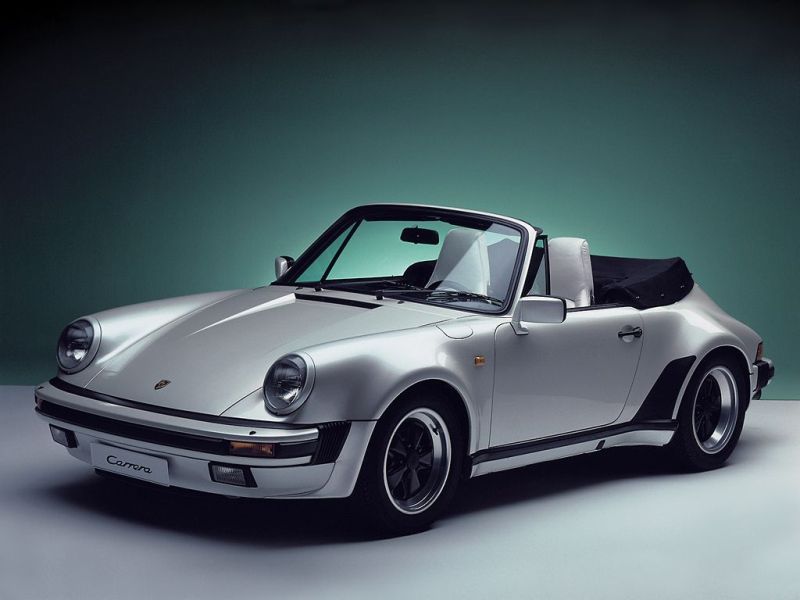
Porsche used an interesting marketing technique. It began offering the so-called "Turbo look." This was optional equipment (designated M491), which included wider fenders and a front and rear spoiler identical to the Turbo. Besides that, the complete brake system, rear torsion bars, arms, and front wheel hubs were taken from the Turbo. The Turbo look was very successful, and more of them were sold than actual Turbos.
Over time, the number of markets to which 911s were supplied with a catalytic converter increased. For example, for Germany, the catalytic converter was installed from 1985. The new Carrera was indeed more powerful than the SC, but it began to gain a bit of weight. Luxury in the form of electrically operated seats, central locking, alarm, and similar conveniences began to creep into the interior. Cabriolets from 1986 have electrically operated roofs.
1987 - 1989

The new G50 gearbox, which replaces the 915 type. This is the most significant change in the Carrera period 1984 - 1989, because the G50 gearbox is significantly better. It has a shorter throw, is lighter, and more precise. Along with it, the original cable-operated clutch is also replaced, and a hydraulic one is introduced. You can recognize the G50 gearbox simply by the fact that reverse is to the left and up.
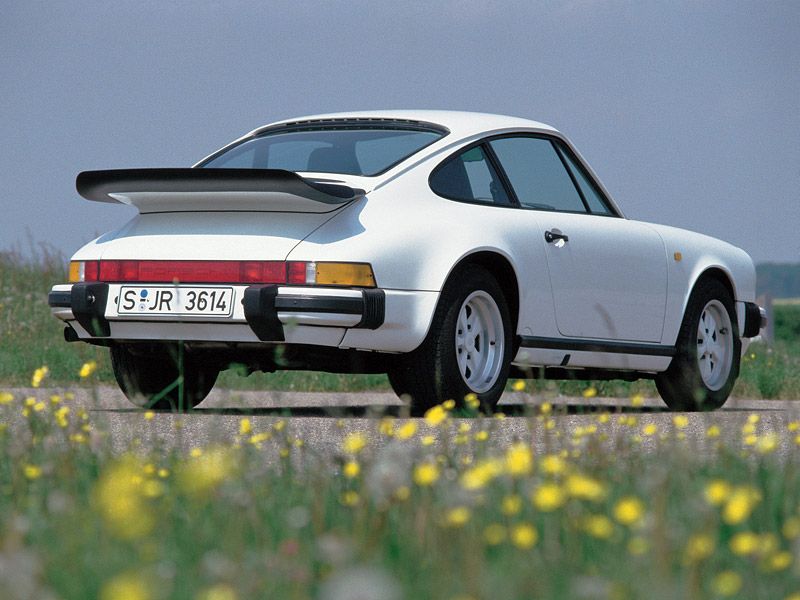
From 1988, the not-very-popular wheels with round holes disappear, and Fuchs are supplied as standard. In 1989, the Turbo finally received a five-speed gearbox.

At the beginning of 1989, the new 911 began to be produced in Zuffenhausen. It is the Carrera 4 (964) type with all-wheel drive, a redesigned body, and a new 3.6L engine. Simultaneously, production of the previous generation of the last classic 911s continues, until the summer of 1989. The very last one is the special Speedster model, which is a convertible with a lower windshield, different side windows, no rear seats, and a lightweight folding roof construction that is operated only manually. The model was intended to follow the tradition of the 356 Speedsters from the 1950s. 2,065 units were produced, most of them with the Turbo look.

The 911 Speedster is a strange animal altogether. It is much more impractical compared to a normal 911, it has a crazy manually folded roof, even the windows are opened with a crank, and for a taller driver, it probably won't be very comfortable to look through the low windshield. With the roof up, which looks quite strangely bulging, it probably won't be very comfortable to sit in either. I don't know, I haven't sat in a Speedster, but it is clear that it is a rare car, and its current market value corresponds to that.
1990-1993

After the 1989 summer holidays and after the end of the Speedster series, the Carrera 2 comes into production, which, except for rear-wheel drive, is the same car as the Carrera 4. Compared to the previous generation, it is said to have 85% new parts, among other things a redesigned wheel suspension (no more torsion bars at the front), new bumpers, a rear spoiler that automatically lifts at higher speeds, and of course a new 3.6L engine, etc. A new Tiptronic automatic gearbox is supplied upon request. The 964 even has power steering.
1994-1997

In these years, Porsche produces the 993 series, which is the last 911 with an air-cooled engine. It doesn't take much from the previous model, essentially only the hood and roof. The 993 also has a 3.6L engine.
Because the classic Targa version was selling less and less, we won't find it in its original form in the 993 series. The 993 Targa is essentially a coupe with a large glass sunroof.
1998 - 2004
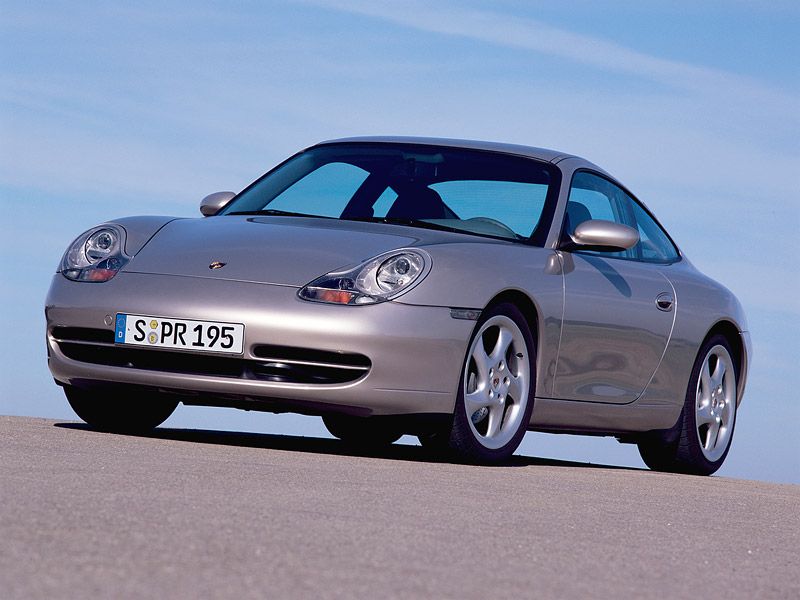
996 model series - the first 911 with a water-cooled engine. The first in the evolution that makes do with a lower engine displacement compared to its predecessor. The first completely new 911 that takes nothing from previous models.
Conclusion
The Porsche 911 is a sports car that, after more than forty years of development, has managed to maintain its identity. Each generation brought technical progress, but the basic concept with a rear engine and typical driving characteristics remained the same. That is precisely why the classic 911 has not only driving value but also collector potential. Whether you are looking for an air-cooled legend or a more modern one with water cooling, the Porsche 911 is a car that does not age.


13.9. 2004