Gerhard Mitter - a successful racing driver and a native of Bohemia

Gerhard Mitter was one of the most prominent racing drivers of the 1960s. His name is inextricably linked to the Porsche brand, to hill climb racing, and to the great moments of world motorsport. Like Ferdinand Porsche, Mitter was also a native of the Czech lands. In this article, we will explore his life's journey, his technical talent, and his unforgettable legacy in motorsport.
From Krásná Lípa to the Racetracks
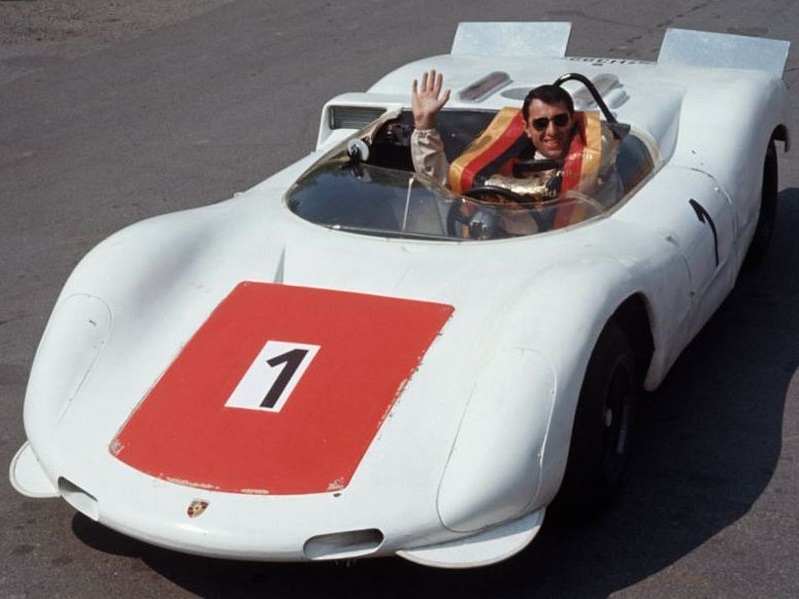
From successes in Formula 1 to legendary hill climbs and triumphs in endurance races, Mitter's career was short but intense. His life story was marked by the dramatic twists of European history. He was born on August 30, 1935, in Krásná Lípa (then Schönlinde). However, the Second World War and the subsequent expulsion of the Sudeten Germans deprived his family not only of their home but also of a carefree childhood. After being forced to leave Bohemia, the Mitters settled in Böblingen near Stuttgart – a city that would later become one of the centers of his professional and racing life.
A man who could not only drive a Porsche, but build one too
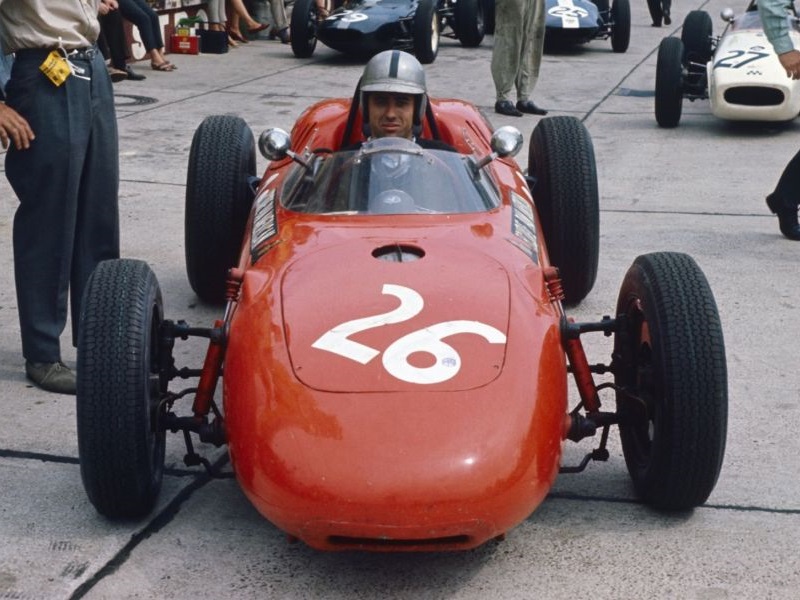
Gerhard Mitter began his path into motorsport on motorcycles. In the 1950s, he achieved his first successes in motorcycle racing before finally switching to the steering wheel of a racing car in 1959. Thanks to a thriving workshop and car dealership, he could afford to turn his passion into a professional career. As a trained mechanic, he excelled not only behind the wheel as an experienced driver but also as a technician of racing machines. It was this combination that made him an extraordinary driver. In Formula Junior, he became the most successful German pilot of his time, and he also drew attention to himself by being able to construct and tune his own cars. Driving a Lotus-DKW, whose engine he personally modified, he was among the absolute elite of the class.
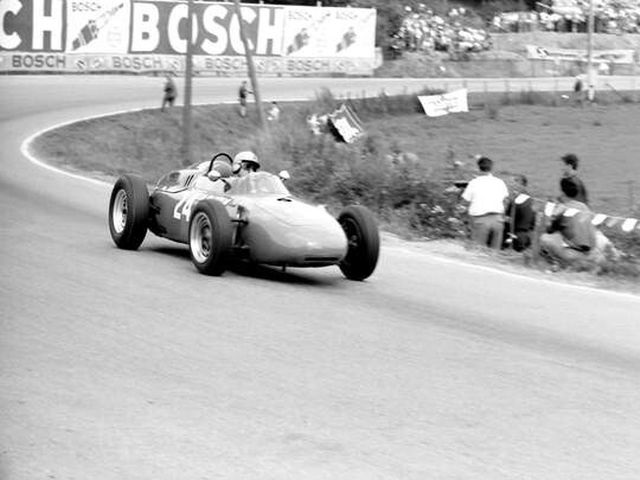
The real breakthrough came in 1963. At the Nürburgring, during his home German Grand Prix, Gerhard Mitter managed to secure fourth place and his first Formula 1 points in a Porsche 718. It was only his second start in the top class. The result confirmed that Porsche had an exceptionally talented driver in its ranks.
Three European titles and victory at Targa Florio
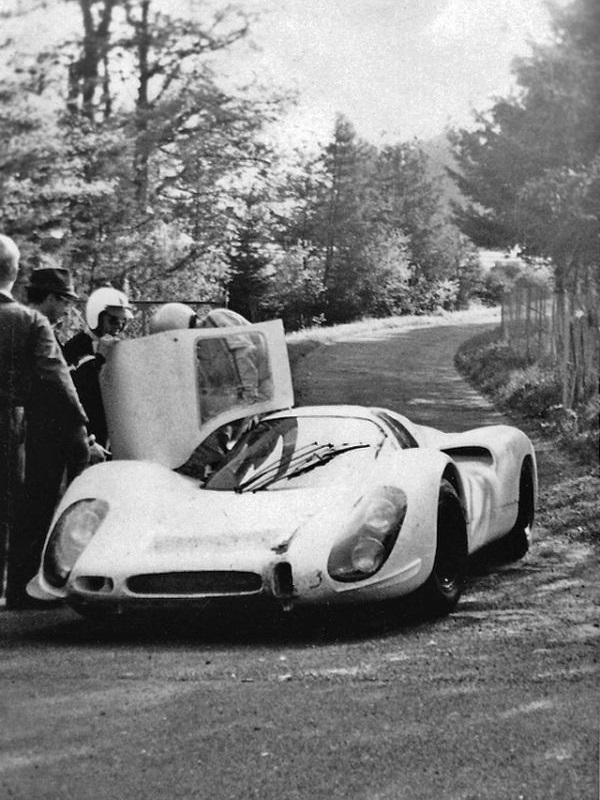
In addition to circuit racing, Mitter became a legend of hill climb racing. In 1964, he entered the European Championship and seamlessly continued the legacy of Edgar Barth, who died tragically in 1965. He won three European Championship titles in a row – in 1966 with the Porsche 906 Carrera 6, and in 1967 and 1968 with the extremely lightweight Porsche 910/8 Bergspyder. Thanks to his ability for absolute concentration and a delicate feel for mechanics, he was practically unbeatable on narrow and dangerous tracks. However, Mitter's qualities were not limited to hill climbs. In 1967, together with Gerhard Koch, he took second place in his class at the legendary 1000 km Spa race in a Porsche 910.
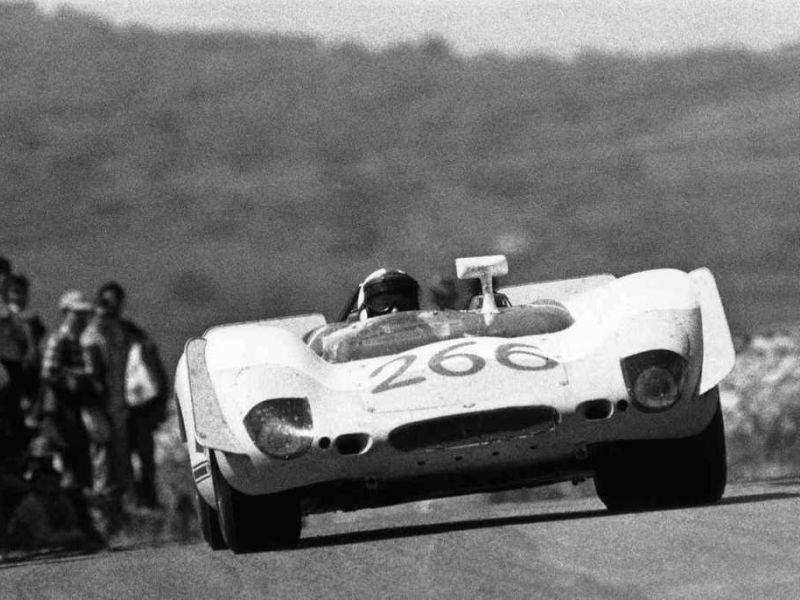
The peak of his career came in 1969. Together with Udo Schütz, he won the demanding Targa Florio behind the wheel of a Porsche 908/02. Just a week later, he debuted at the Spa-Francorchamps circuit with the new Porsche 917. Although a technical failure – a broken valve spring – forced him out after just one lap, Mitter was still part of the Porsche factory team that season, which won the FIA World Sportscar Championship for the first time in the brand's history. Another significant result was his second place at the 24 Hours of Daytona, where Mitter and Schütz managed to break into the absolute elite of endurance racing in a Porsche 908 LH.
1969: The final season and a tragic end
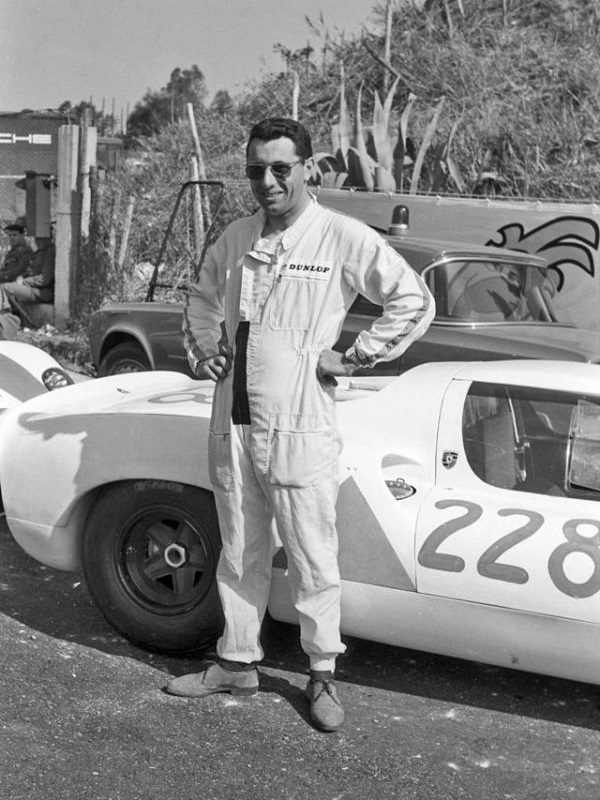
Despite his successes in endurance racing and the European Hill Climb Championship, Gerhard Mitter returned to the world of Formula racing. This move proved fatal. On August 1, 1969, during Friday practice for the German Grand Prix at the Nürburgring, Mitter crashed his BMW Formula 2 car in the fast Flugplatz section. At just 33 years old, he succumbed to the injuries from the accident. In his memory, all other BMW Formula 2 drivers withdrew from the race, as did his close friend Hans Herrmann.
Gerhard Mitter was one of those drivers whose career was very short but exceptionally intense. He managed to combine the technical intelligence of a mechanic with the instinct of a top-tier racer, leaving a deep mark on the history of Porsche and European motorsport. Like many other drivers of his generation, he became a victim of an era when courage often outpaced safety. However, his name remains a symbol of driving precision, unwavering concentration, and dedication to racing – values upon which the Porsche brand built its reputation.
Overview of Gerhard Mitter's race wins with Porsche
| Date | Race | Drivers | Model |
|---|---|---|---|
| May 3, 1964 | DARM GT Trier (GT2.5) | Gerhard Mitter | 907 LH (Langheck Coupe) |
| June 13, 1965 | Rossfeld Hill Climb | Gerhard Mitter | 904/8 Bergspyder |
| July 4, 1965 | Norisring (P2.0) | Gerhard Mitter | 904/8 Bergspyder |
| July 18, 1965 | Solitude (P2.0) | Gerhard Mitter | 904/8 Bergspyder |
| June 19, 1966 | DARM Mainz-Finthen (S+1.6) | Gerhard Mitter | 906 Carrera 6 |
| July 17, 1966 | DARM Norisring - Sports and Prototypes | Gerhard Mitter | 906 Carrera 6 |
| Sept 11, 1966 | Hockenheim Grand Prix | Gerhard Mitter | 906 Carrera 6 |
| Aug 14, 1966 | 500 km Zeltweg | Gerhard Mitter / Hans Herrmann | 906 Carrera 6 |
| Oct 9, 1966 | Preis von Tirol (SP2.0) | Gerhard Mitter | 906 Carrera 6 |
| March 19, 1967 | 4 Hours of Monza | Gerhard Mitter / Karl von Wendt | 911 S |
| July 23, 1967 | Mugello Grand Prix | Gerhard Mitter / Udo Schütz | 910/8 |
| July 30, 1967 | Freiburg-Schauinsland Hill Climb | Gerhard Mitter | 910/8 Bergspyder |
| Aug 27, 1967 | Ollon-Villars Hill Climb | Gerhard Mitter | 910/8 Bergspyder |
| May 4, 1969 | Targa Florio | Gerhard Mitter / Udo Schütz | 908/02 Spyder |


1.8. 2019