A Century of Porsche All-Wheel Drive

All-wheel drive is nothing new in Porsche's history; it is a technical concept that Ferdinand Porsche introduced as early as 1901. From the revolutionary electric wheel-hub motor in the Lohner-Porsche, through hybrid trains and military KdF specials, to the technological pinnacle represented by the 959 model and the modern Cayenne SUV. A century of 4x4 system development began with the native of Vratislavice nad Nisou and today forms a pillar of performance for the Porsche 911 Turbo and Carrera 4 models.

The year was 1901. At the age of twenty-six, Ferdinand Porsche personally handed over an all-wheel-drive Lohner-Porsche race car to Mr. E. W. Hart. The technical concept of all-wheel drive, brought to light by the native of Vratislavice nad Nisou, found wide application over the following century. Today, there is arguably no car manufacturer that does not offer its clients a model featuring the original all-wheel-drive concept. Ferdinand's original idea was reworked over time and improved by engineers from various car companies, but the foundation remains.
In 2003, Porsche introduced an SUV to the public (a class no Porsche had ever belonged to before). This is the Cayenne sports utility vehicle. It is produced at a new plant in Leipzig, Saxony. That is perhaps a compelling reason to look back at a century of all-wheel drive.
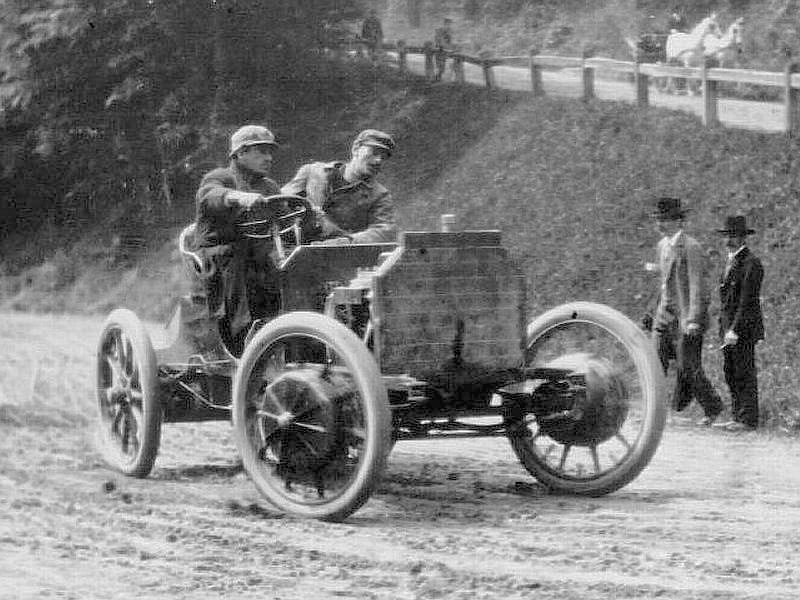
While it is not documented how many successes E. W. Hart achieved in races with the Lohner-Porsche, the victory of the same car with Ferdinand behind the wheel at the 1901 Exelberg hill climb is well-documented. The idea of the talented young designer, which newspapers at the time called an "epochal novelty," was that a DC electric motor was built into the hub of each wheel, with its rotor connected directly to the wheel. There were no transmission or drive shafts in the car, which resulted in reduced friction losses. Most interestingly, the system operated with 85% efficiency. I must also mention that many decades later, NASA used the identical principle in a special vehicle that drove on the surface of the Moon.
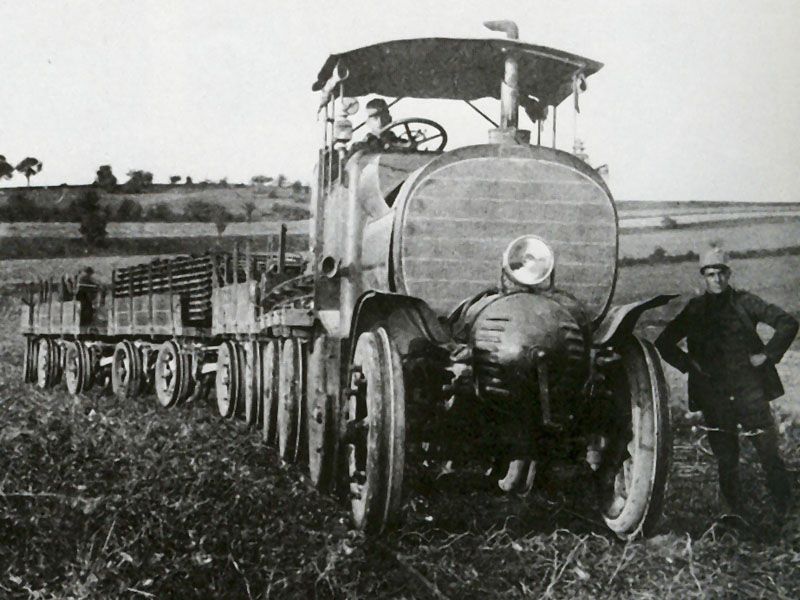
By 1912, Ferdinand had already been working for six years as the technical director of Austro-Daimler, a subsidiary of the German automaker Daimler-Motoren-Gesellschaft, based in Wiener Neustadt. At that time, he was working on an unusual design for a military equipment transport train. The idea was inspired by Ottokar Landwehr von Pragenau. For Ferdinand, this concept was highly inspiring. The train was intended to run not only on tracks but also on roads. Its kinetic energy was to be provided by a mixed gasoline-electric drive, now known as a hybrid. Five or six wagons could be attached to the towing vehicle (locomotive) that housed the generators. The smaller number applied to roads, the larger to tracks. The train moved on roads on wheels with solid rubber tires; for travel on railway tracks, steel rims were bolted onto the tires. The towing vehicle contained a 74 kW internal combustion engine directly connected to a 70 kW dynamo. Electrical energy was transmitted via cabling from the first to the last wagon, powering the wheels of every second axle. With rubber tires, the train moved without problems even on unpaved roads, and on tracks, it could handle gradients of up to 90 per mille.
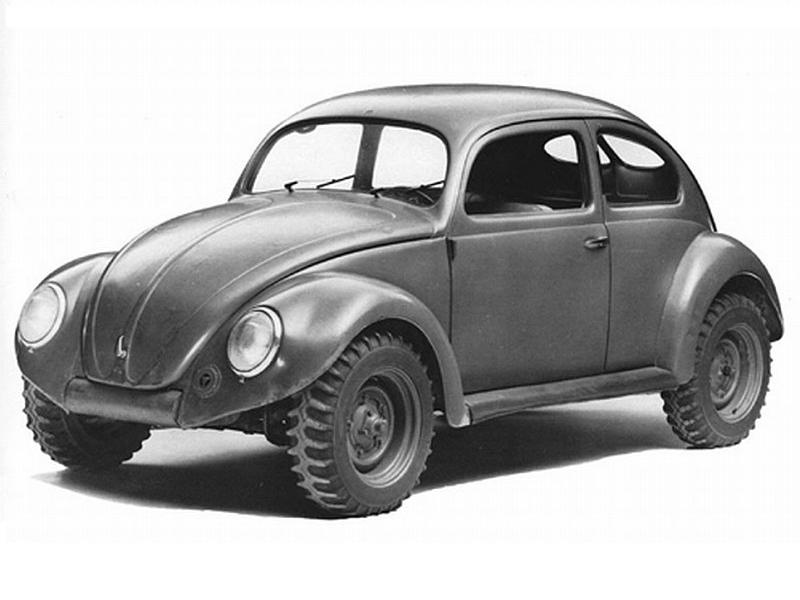
When Ferdinand Porsche opened his own design office on Kronenstrasse in Stuttgart in 1931, he worked, among other things, on the NSU small car project with a rear-mounted engine, which was the predecessor to the future VW Beetle, for which an all-wheel-drive variant was also envisioned. Chief designer Karl Rabe, who was one of Ferdinand Porsche's closest collaborators, designed a front-wheel-drive system in 1934 where a drive shaft led from the engine and transmission, mounted in the rear, to the front-wheel differential.
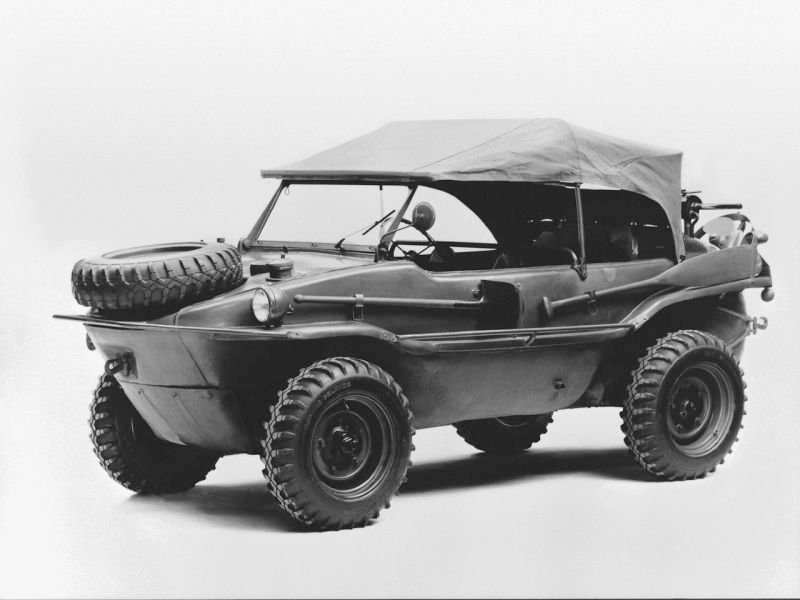
A similar principle returned to realization many years later in the legendary Porsche 959. This principle is still used today, for example, in the Porsche 911 Carrera 4 and 911 Turbo. Let us not forget, however, that a switchable front-wheel drive was also featured in its time by the VW "Beetle" Type 87 from 1940, the well-known "Vodník" KdF Type 166 from 1941, or the KdF Type 82.
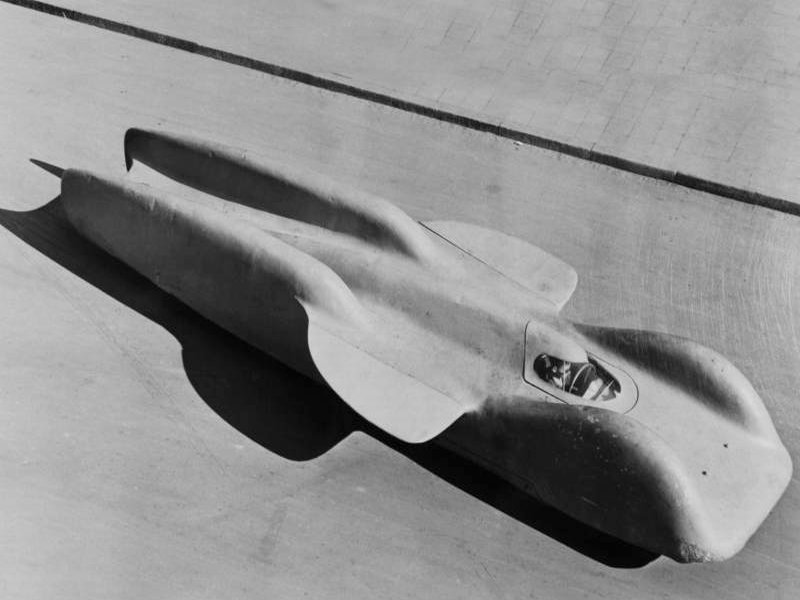
Ferdinand Porsche was also behind the design of the Mercedes-Benz T80 (Project 80) from 1937, which was intended to break the world land speed record. Both rear axles of the three-axle chassis were powered by a 2,208 kW engine. The aerodynamically shaped body achieved an incredible drag coefficient of cx = 0.18. Unfortunately, the outbreak of the Second World War did not allow the wishes and hopes placed in this car to be fulfilled.
The Second World War brought Ferdinand Porsche's team to Carinthia, Austria. When the guns fell silent and the long-awaited peace settled over Europe, a group of top automotive engineers began working on projects where they could once again prove how deep the well of their technical invention was.
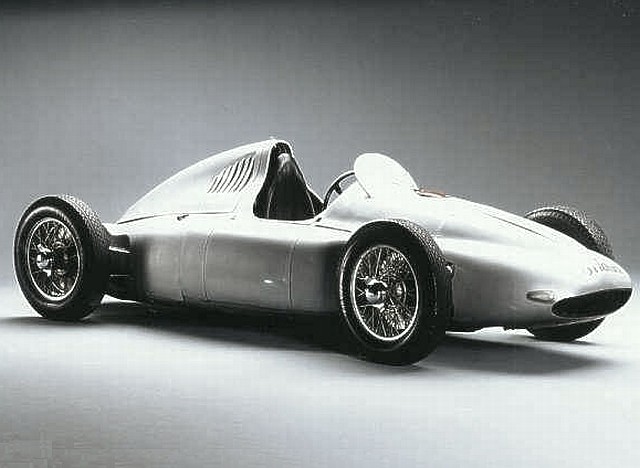
When the Cisitalia race car was created in 1947, the project's financier, Piero Dusio, suffered major financial difficulties. These troubles meant the car never got a chance on Grand Prix circuits. The Cisitalia, which had all-wheel drive, had many prerequisites for success. It was powered by a 1.5-liter supercharged twelve-cylinder engine with a high output of 283 kW.
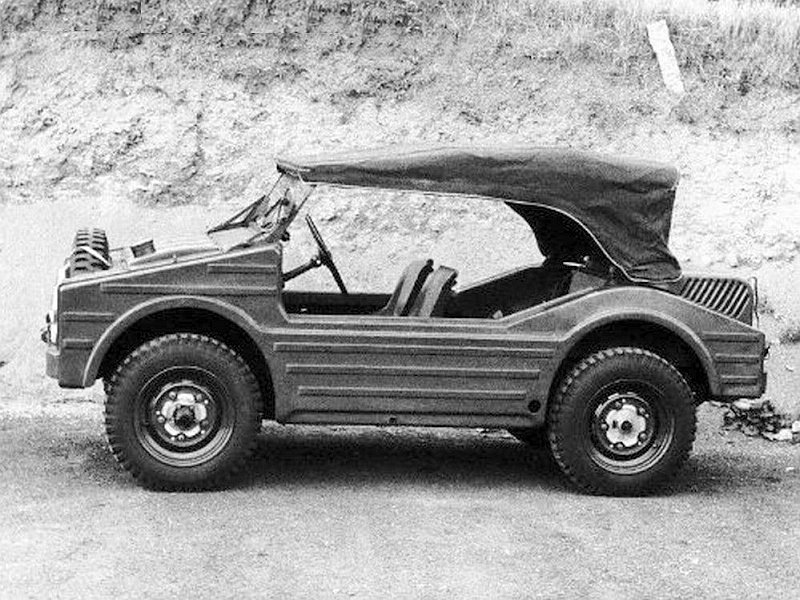
The all-wheel-drive concept was also realized during the Porsche 356 era. This happened when the Porsche 597 Jagdwagen off-road vehicle with switchable front-wheel drive began production.
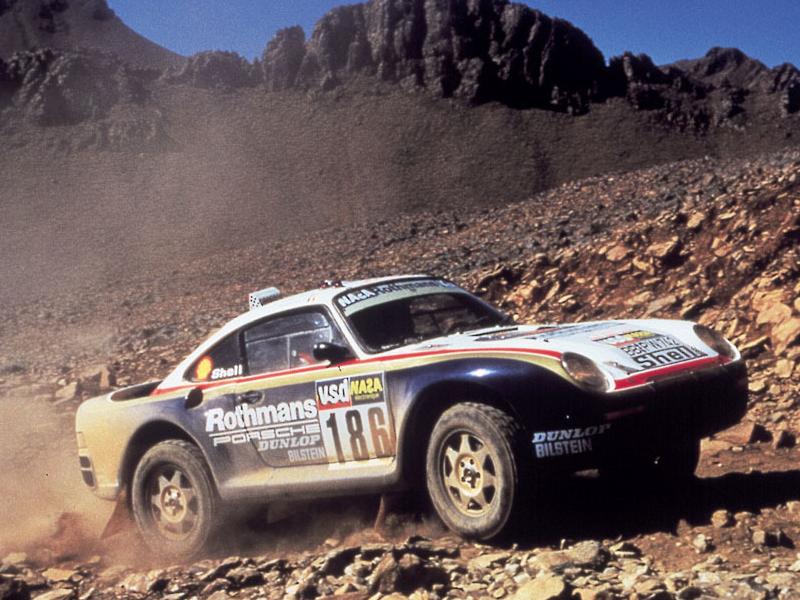
After the 356 era, a new 911 era began in 1963, which remains in the automaker's production program to this day. All-wheel drive first appeared in the 911 in 1981, when the Porsche 911 Turbo Cabriolet study was presented at the Frankfurt IAA motor show in September. However, two years later, a completely new car shocked the world of automotive experts – the Porsche 959. It featured a highly sophisticated all-wheel-drive system and adjustable ride height and damper stiffness. The car, prepared for sports competition in Group B according to FIA regulations, won the 1985 Pharaohs Rally in Egypt, and a year later, it also took victory in the Paris–Dakar Rally.
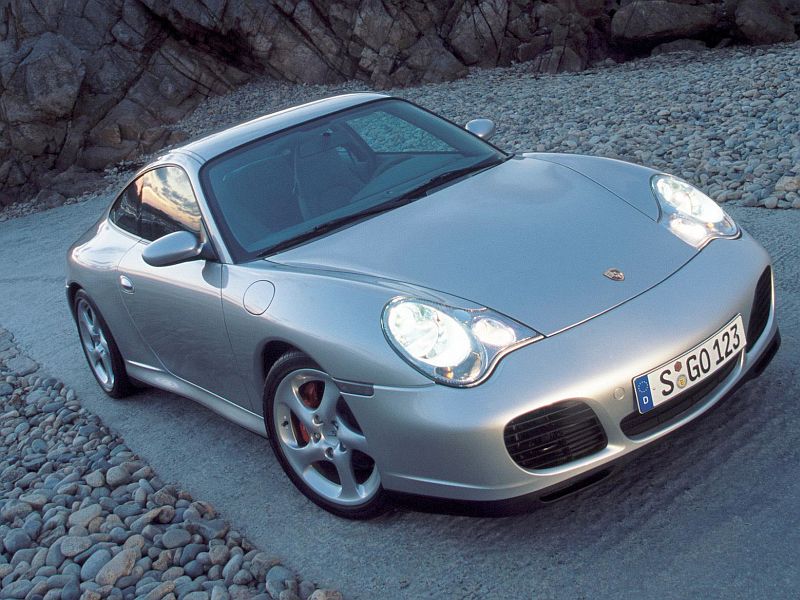
Advanced all-wheel drive plays one of the most important roles in the Stuttgart automaker's current production program and demonstrates its ability to dominate in any conditions. Today's models, such as the Porsche 911 Carrera 4 and Porsche 911 Turbo, are clear proof that Ferdinand Porsche's vision has lost none of its relevance even after more than a century. The arrival of the Porsche Cayenne SUV only definitively amplified this idea and made it accessible to a wider spectrum of drivers. From the first electric wheel-hub motors of 1901 to the sophisticated systems of today, there runs a single, unceasing desire for maximum traction and precise control. The story of all-wheel drive at Porsche thus remains an open chapter that continues to hold to the original course set 100 years ago by the native of Vratislavice.


16.5. 2004