The Porsche Carrera GT is coming to an end. The last six cars have left the factory.

On May 6, 2006, the last six examples of the Carrera GT model left the Porsche factory in Leipzig. After less than three years of series production, the chapter closed on one of the most distinctive supercars of its time, which captivated with its V10 engine, a top speed of 330 km/h, and a design inspired by racing technologies.
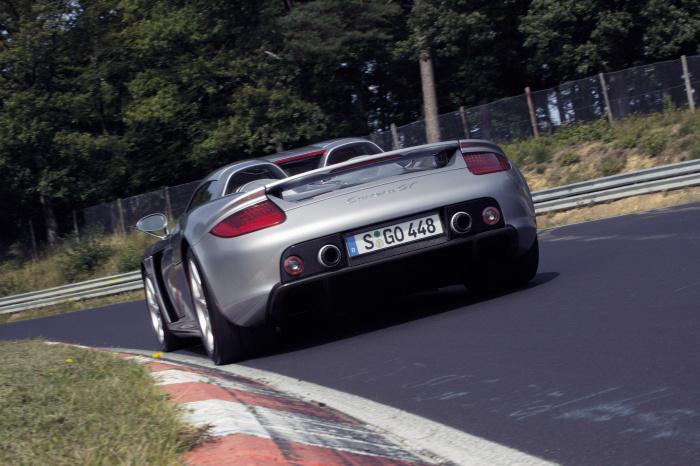
On May 6, 2006, the last six Carrera GT cars left the Porsche production hall in Leipzig. One of the brand's most ambitious projects thus reached its conclusion. During its short production run, the Carrera GT became Porsche's technical flagship and contributed significantly to the automaker's prestige among manufacturers of supercars.
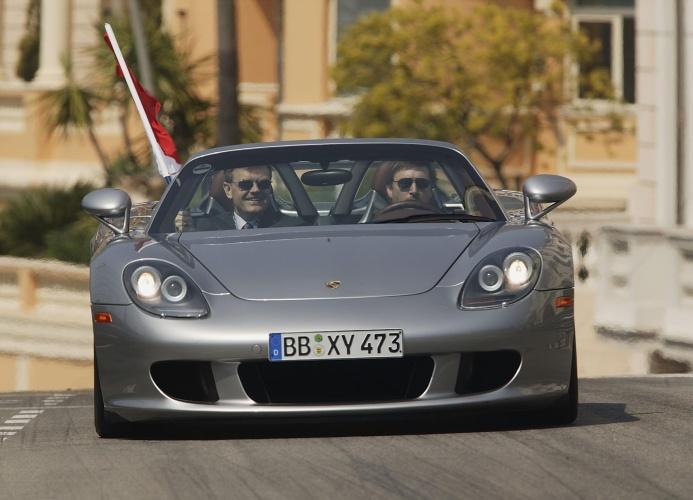
The car was first introduced to the public as a concept on September 28, 2000. The production version followed on March 6, 2003, at the Geneva Motor Show. Production started in Leipzig, and the originally planned number of cars was eventually increased. Nevertheless, the Carrera GT remained an exclusive affair intended for only a small group of customers.
The heart of the Carrera GT was a naturally aspirated V10 engine with a displacement of 5,733 cm³. It reached an output of 450 kW (612 hp) at 8,000 rpm and a maximum torque of 590 Nm at 5,750 rpm. The top speed was 330 km/h. The engine design was based on the development of a racing unit, and together with the lightweight construction, carbon fiber monocoque, and ceramic clutch, it helped create a car that differed significantly in character from standard road-going Porsches. The Carrera GT was one of the most impressive proofs of what the combination of racing experience and the development of a road-going supercar can achieve.

The most significant market became the United States, which accounted for approximately half of the production. In Europe, important markets included Germany, Great Britain, and Italy. The Czech balance was also interesting – according to data from the time, four examples of the Carrera GT were sold in our country. The production of each car required a significant amount of manual labor. The assembly itself took approximately 130 hours, with the engine assembly accounting for about 45 hours. Production was limited to a maximum of three cars per day, which corresponded to the exclusive nature of this model. Carrera GT makes way for the Panamera
With the end of Carrera GT production, the way was cleared in Leipzig for another significant project for the brand – the Panamera model. Unlike the small-series supercar, however, the Panamera had the ambition to appeal to a significantly wider group of customers. Its production therefore required new manufacturing capacities and modifications to the plant. The Carrera GT remained a symbol of an era when Porsche was able to offer an uncompromising supercar with a naturally aspirated V10 engine and technology close to racing cars. Its production ended, but its place in the brand's history remained firm.


6.5. 2006