Interesting facts about the movie Le Mans (1971)

The iconic 1971 film Le Mans, starring Steve McQueen, is one of those works that needs no long introduction for motorsport fans. For enthusiasts of Porsche and the 24 Hours of Le Mans, it is an untouchable classic and a realistic look into the world of motorsport that has never been repeated. This year, the film marks a significant anniversary, providing an ideal opportunity to look back at its creation.
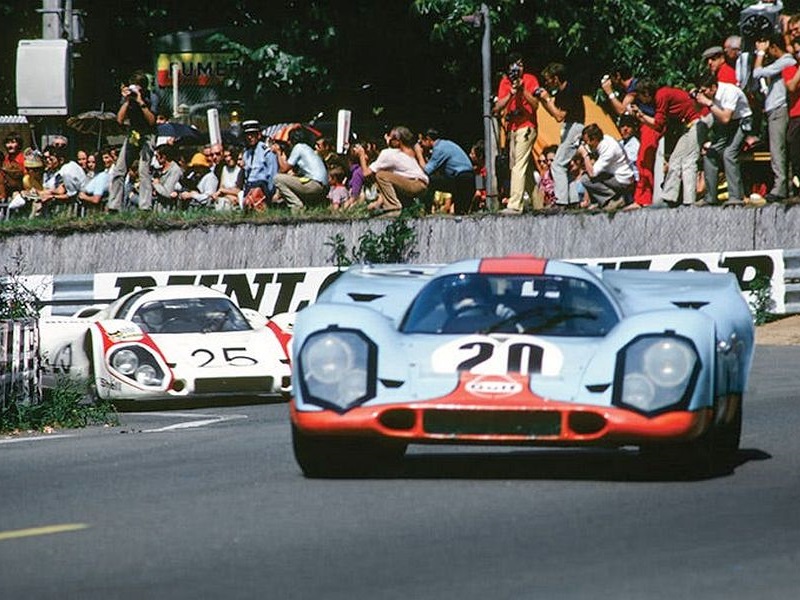
Steve McQueen was not just a Hollywood star. Motorsport was his passion, and the dream of making an authentic film about Le Mans had been maturing in him for many years. He did not want a flashy Hollywood spectacle, but a true picture of a racer's life: the silence before the start, the fatigue during the night hours, the nervousness in the pits, and the moments when everything is decided in seconds. That is precisely why Le Mans is still considered the most realistic racing film of all time.
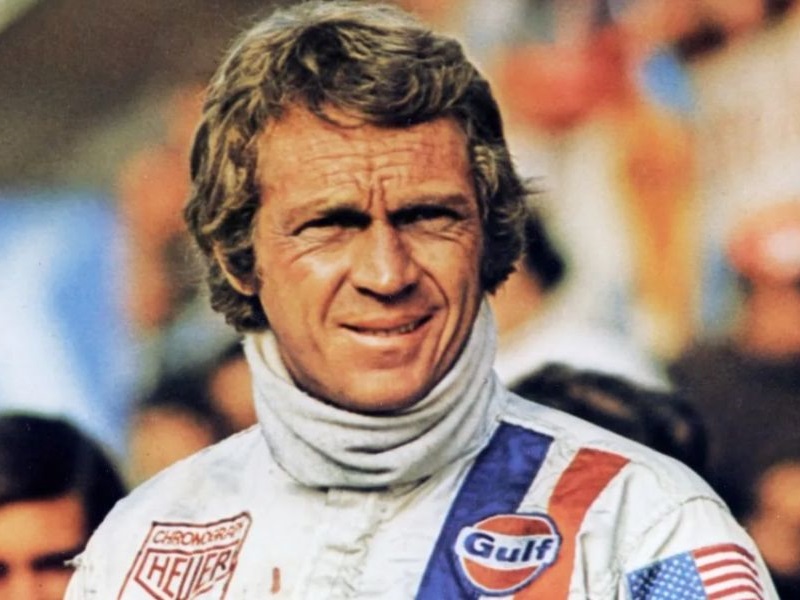
Preparations for filming began three years before its 1971 premiere. McQueen purchased his own Porsche 908 Flunder Spyder, with which he first trained in California, subsequently obtained a racing license, and even participated in real endurance races. The highlight was his entry in the 12 Hours of Sebring, where, despite a broken leg, he finished second alongside Peter Revson. This very Porsche 908 also became one of the main camera cars used during the filming of the actual Le Mans race.
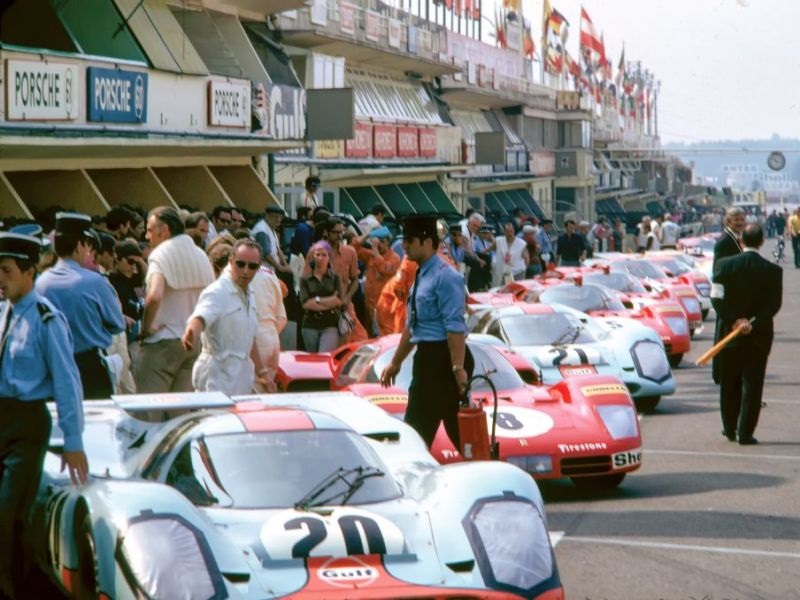
The film's production was unprecedented. 41 professional racing drivers were hired for the shoot, including true legends such as Jacky Ickx, Richard Attwood, Gérard Larrousse, Jürgen Barth, Masten Gregory, and Derek Bell. Six of them were either current or future winners of the 24 Hours of Le Mans. McQueen's company, Solar Productions, even built an improvised "film town" near the Houx campsite, complete with administrative facilities, a screening room, and a canteen, where one of the first microwave ovens in the paddock was installed.
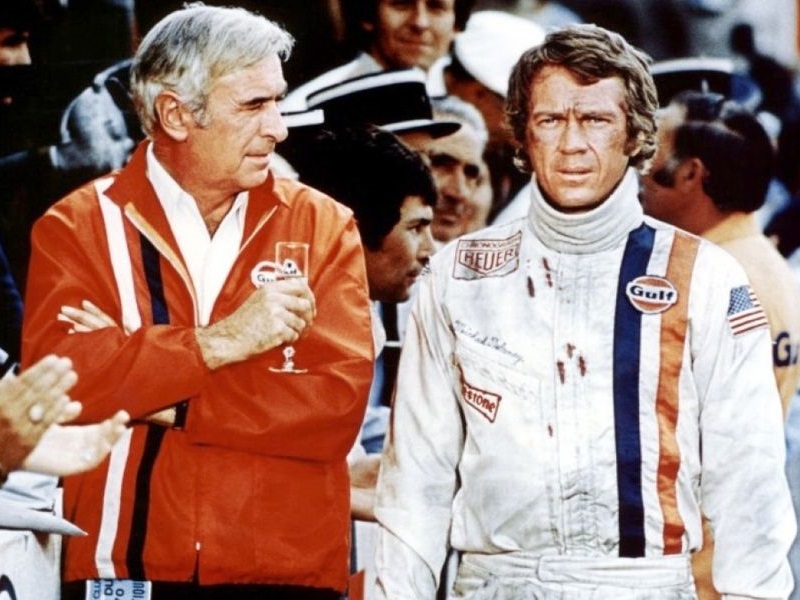
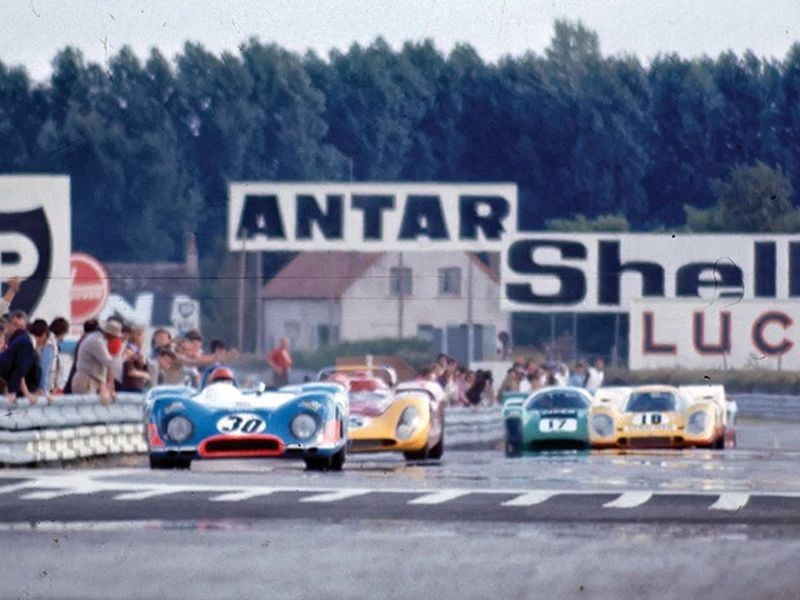
A large part of the film was shot during the actual 24 Hours of Le Mans in 1970, in which Porsche celebrated its first overall victory with the 917 K and swept all three podium spots. Nevertheless, the film's story is fictional – the names of the drivers and the race results do not correspond to reality, and paradoxically, the actual winning Porsche 917 is somewhat sidelined in the film. The creators focused on the atmosphere, emotions, and rhythm of the race, rather than documentary accuracy.
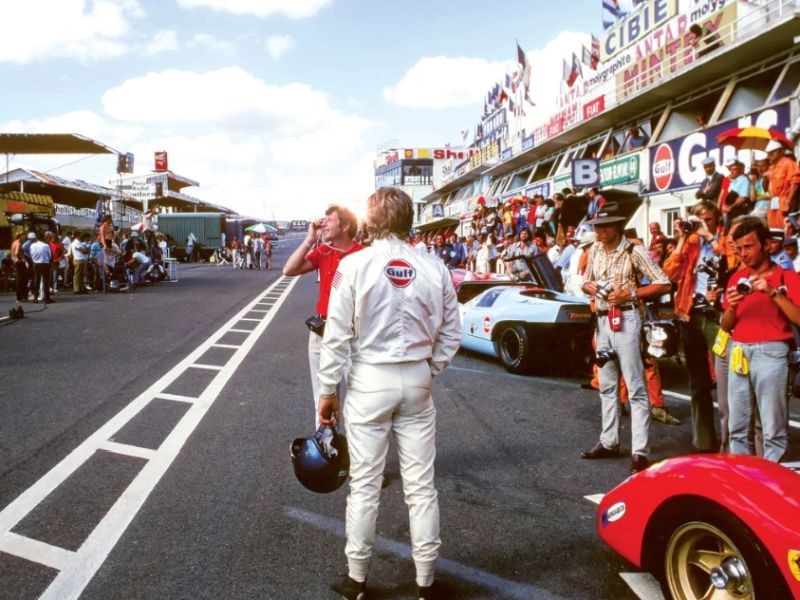
Filming began on June 7, 1970, even before the final version of the script—which involved Harry Kleiner and automotive journalist Ken Purdy, among others—was completed. After the real race ended, the film crew stayed at the circuit and continued shooting fictional scenes with Porsche 917 and Ferrari 512 cars. An interesting detail was the search for "insects"—during the real race, bugs and dirt stuck to the windshields, but during the additional filming, there were almost none on the track, so the crew had to add them artificially.
The filming itself was not without risk. During one scene where a driver runs from an exploding Ferrari, the car caught fire earlier than planned. The stuntman did not manage to run to a safe distance and suffered burns. Only a portion of this shot made it into the final cut—further proof of how close the film was to reality, sometimes dangerously so.
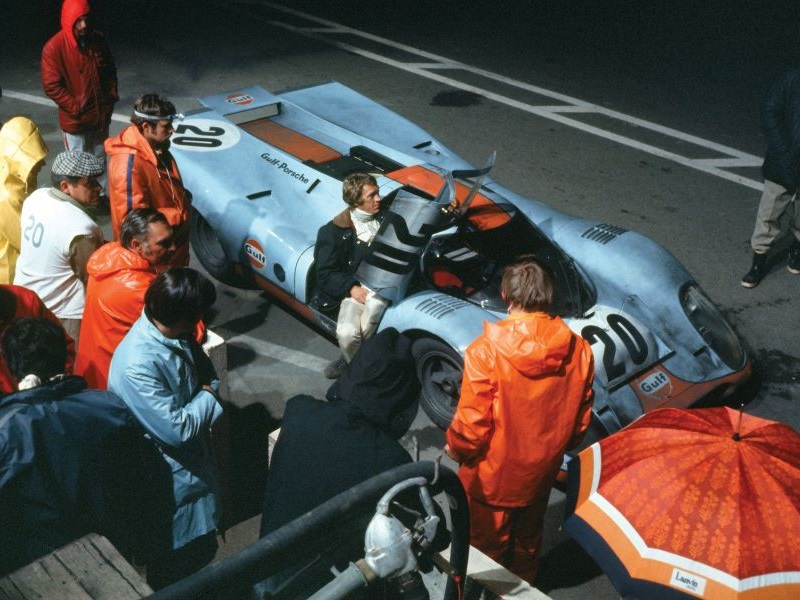
The film premiered on June 23, 1971. A total of approximately 10,000 meters of film material was shot, from which a 104-minute movie was created. During the first thirty minutes, virtually not a single word is spoken—instead of dialogue, the sound of engines, cockpit footage, and the atmosphere of the night at Le Mans do the talking. This is exactly what sets Le Mans apart from all other racing films.
Le Mans is not just a film. It is a tribute to endurance racing, to Porsche, to the drivers, and to the fans who stay awake in the pits long after dark. And that is why, even after more than half a century, it remains a must-watch for anyone with gasoline in their blood.
Comparison of the 1970 24 Hours of Le Mans results
| Actual standings | Standings in the film | |
|---|---|---|
| 1. | Porsche 917 K #23, Hans Herrmann/Richard Attwood | Porsche 917 K #22, Paul-Jacques Dion/Larry Wilson |
| 2. | Porsche 917 LH #3, Gérard Larrousse/Willi Kauhsen | Porsche 917 K #21, Johann Ritter/Peter Wiese/Michael Delaney (played by McQueen) |
| 3. | Porsche 908/02 LH #27, Helmut Marko/Rudi Lins | Ferrari 512S Stahl #8 |


14.8. 2021